
 5 min
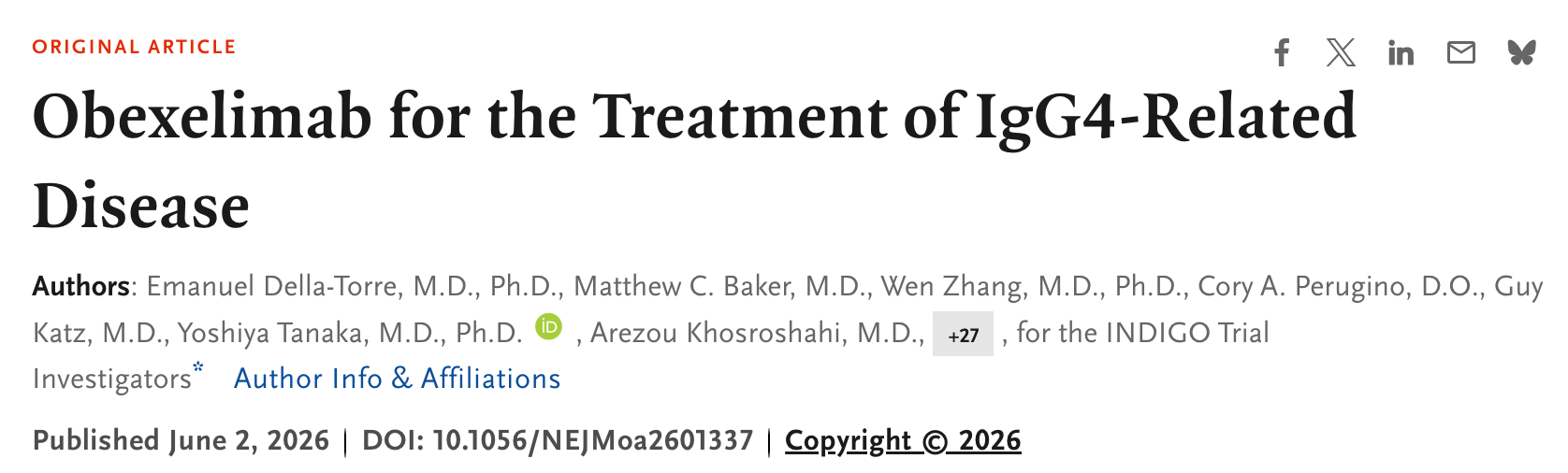
5 minZenas BioPharma recently announced groundbreaking data from the Phase 3 INDIGO trial of its lead candidate, Obexelimab, at the EULAR 2026 Congress, with concurrent publication in the New England Journal of Medicine(NEJM). As the largest clinical trial ever conducted for Immunoglobulin G4-Related Disease (IgG4-RD), the INDIGO study met its primary and all key secondary endpoints, offering a potential "remission-like" innovative therapy for patients worldwide living with this devastating condition.
Clinical Core Data: Setting a New Standard for IgG4-RD
The INDIGO trial enrolled 194 patients with newly diagnosed or recurrent IgG4-RD, randomized 1:1 to receive either weekly subcutaneous injections of Obexelimab (250 mg) or a placebo. After 52 weeks of rigorous observation, the results demonstrated high statistical significance across multiple metrics:
-
Significant Reduction in Flare Risk: Obexelimab reduced the risk of disease flare by 56% compared to placebo (HR 0.44; p=0.0005). Throughout the 52-week period, 73.2% of patients treated with Obexelimab remained flare-free, compared to only 45.4% in the placebo group.
-
Superior Complete Remission Rates: At Week 52, 37.1% of patients in the Obexelimab arm achieved complete remission, representing a 17.7% improvement over the placebo arm (19.6%; p=0.0049).
-
Reduced Glucocorticoid Rescue Requirements: The mean cumulative use of glucocorticoid rescue therapy over 52 weeks was only 329.5 mg for Obexelimab-treated patients, compared to 929.8 mg for the placebo group—a reduction of approximately 65% (p=0.0042).
Breaking "Steroid Dependency" and Reducing Toxicity
Glucocorticoids have long been a "double-edged sword" in IgG4-RD management. While they control acute inflammation, long-term use frequently leads to debilitating side effects, including diabetes, hypertension, and osteoporosis, which significantly impact patient quality of life.
The INDIGO study utilized the Glucocorticoid Toxicity Index (GTI) to evaluate the drug’s potential to spare patients from these harms. By Week 52, the proportion of patients exceeding predefined glucocorticoid toxicity worsening thresholds was significantly lower in the Obexelimab group. Specifically, only 28.9% of Obexelimab-treated patients reached a ≥30-point increase on the GTI-CWS, compared to 49.4% in the placebo group (p=0.0090). This confirms that Obexelimab not only excels in disease control but also substantially alleviates the long-term toxicity burden associated with chronic steroid use.
A Unique Dual-Target Inhibition Mechanism
Obexelimab is not a traditional B-cell depletion therapy. It is an innovative bifunctional monoclonal antibody designed to bind to both CD19 and FcγRIIb.
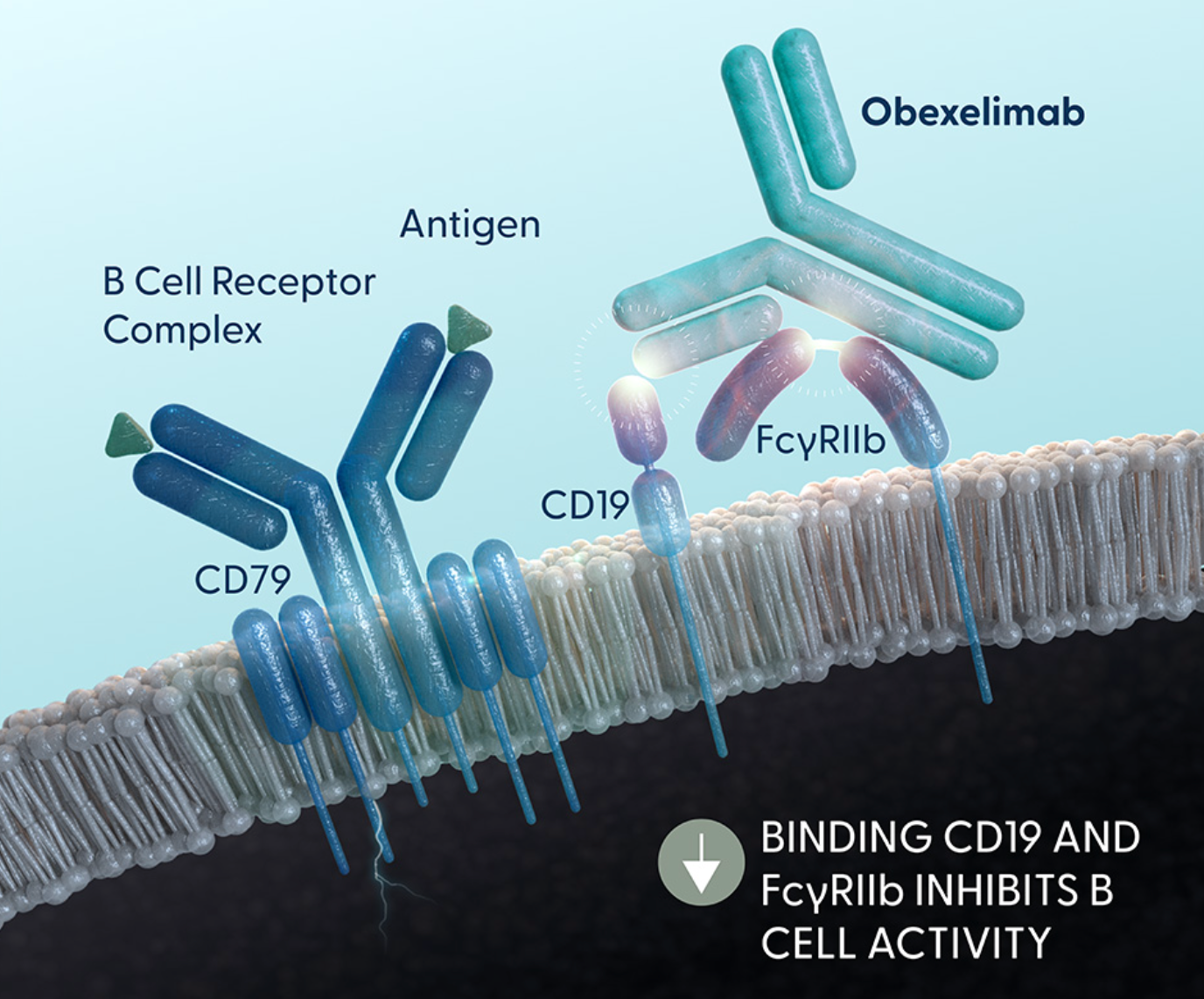
This unique design enables the drug to precisely inhibit the activity of pathogenic cells implicated in autoimmune diseases without depleting them. Compared to traditional B-cell depleting agents, this "inhibition rather than elimination" strategy offers a potential safety advantage. Furthermore, Obexelimab supports subcutaneous self-administration, significantly enhancing the convenience of long-term chronic disease management for patients.
Safety Profile and Future Outlook
Obexelimab demonstrated a safety profile comparable to that of the placebo in the INDIGO trial. Notably, the incidence of Grade ≥3 Treatment-Emergent Adverse Events (TEAEs) was 11.3% for Obexelimab, significantly lower than the 23.7% observed in the placebo group. Serious Adverse Events (SAEs) were also lower in the Obexelimab arm (10.3% vs. 18.6%).
"Physicians currently have very few treatment options for patients living with this chronic, progressive, and debilitating disease," commented Dr. Emanuel Della Torre of Vita-Salute San Raffaele University in Milan, Italy. "Obexelimab provides a novel, highly active, self-administered therapy that has the potential to avoid the safety concerns associated with chronic steroid use and long-term B-cell depletion."
A Biologics License Application (BLA) for Obexelimab was officially submitted to the U.S. FDA in May 2026. Zenas BioPharma CEO Lonnie Moulder expressed strong confidence in the drug's potential to become a first-line therapy for the long-term management of IgG4-RD. As the INDIGO trial advances through its three-year open-label extension period, ongoing data collection is expected to further solidify this candidate's pivotal role in the treatment of autoimmune diseases.
