

 5 min
5 minAt the 2026 American Society of Clinical Oncology (ASCO) Annual Meeting's highly anticipated Plenary Session, Revolution Medicines, Inc. unveiled detailed results from the global, randomized Phase 3 RASolute 302 trial, which evaluated its investigational drug, daraxonrasib, in patients with previously treated metastatic pancreatic ductal adenocarcinoma (PDAC).
The study results were simultaneously published in the New England Journal of Medicine (NEJM). Given the significant survival benefits and favorable tolerability profile, industry experts suggest the drug could establish a new standard of care for metastatic pancreatic cancer.
Breakthrough Data: Median OS Doubled, Redefining Treatment Expectations
Pancreatic cancer is often referred to as the "king of cancers" due to its high mortality rate and extreme resistance to standard chemotherapy. RAS proteins are among the primary oncogenic drivers in human tumors; more than 90% of pancreatic cancer patients harbor RAS mutations, and their tumors are typically characterized by persistent RAS(ON) signaling.
Daraxonrasib is a novel oral RAS(ON) multi-selective inhibitor designed to cover a broad spectrum of RAS variants. The global RASolute 302 study enrolled 500 patients with previously treated metastatic PDAC, who were randomized to receive either daraxonrasib monotherapy or investigator’s choice of chemotherapy.
Key Clinical Data:
-
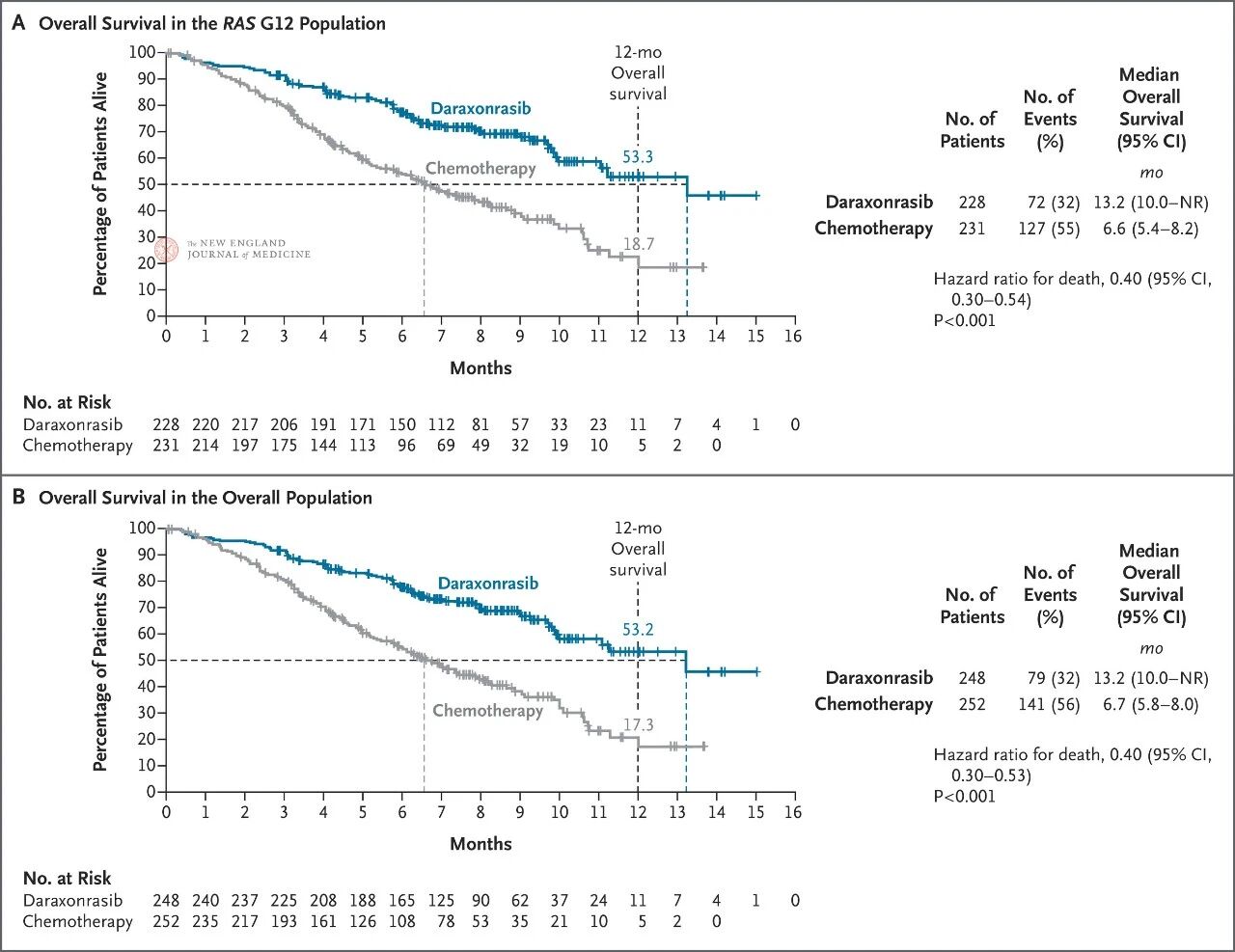
Significant Reduction in Risk of Death: In both the RAS G12 mutant population and the intent-to-treat (ITT) population, daraxonrasib achieved a 60% reduction in the risk of death (HR=0.40, p<0.0001).
-
Survival Milestone: In the RAS G12 mutant population, the median overall survival (mOS) for the daraxonrasib arm reached 13.2 months, compared to only 6.6 months for the chemotherapy arm. Results were consistent in the ITT population (which included wild-type patients), with a median OS of 13.2 months versus 6.7 months.
-
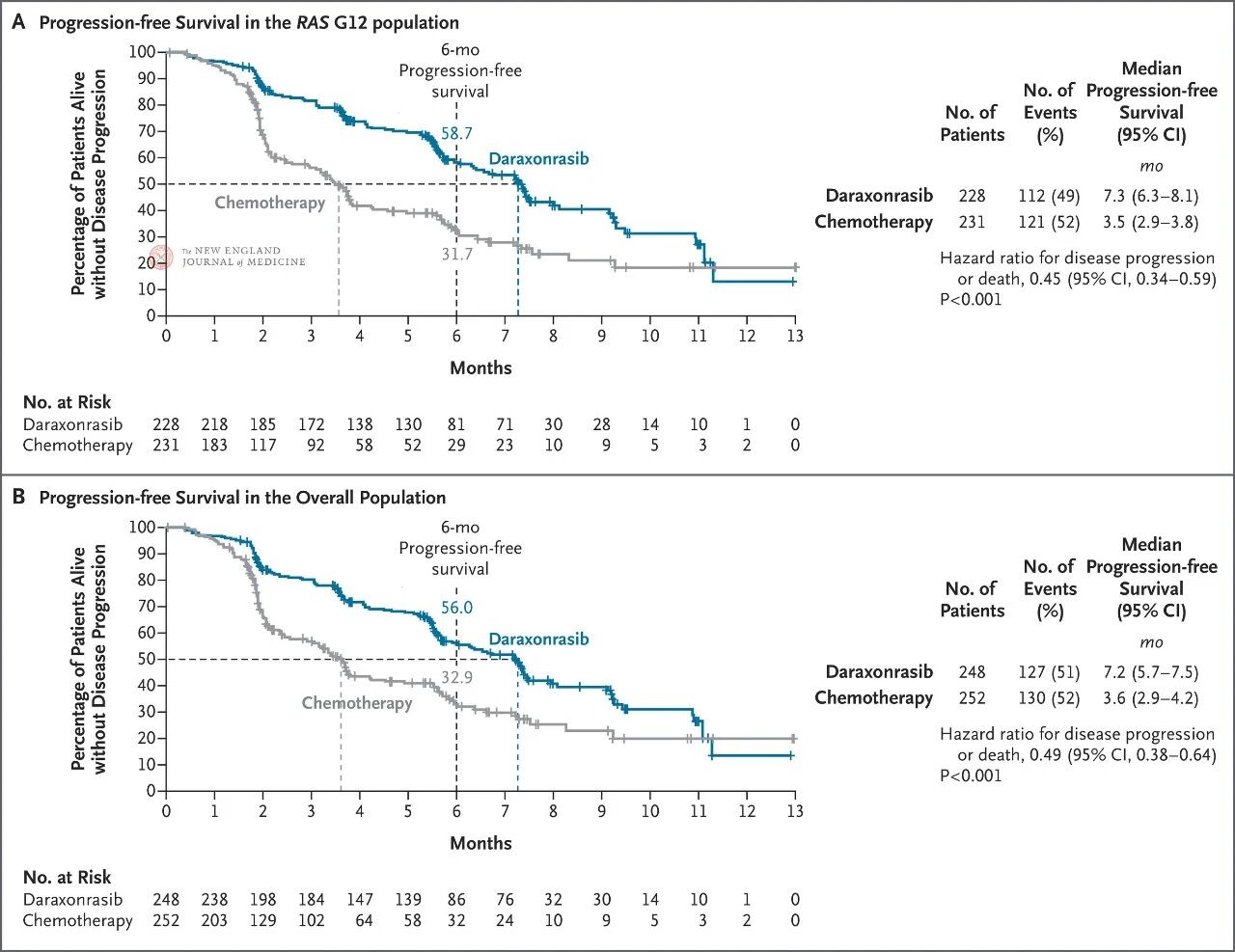
Significant PFS Benefit: In the RAS G12 population, the median progression-free survival (mPFS) for the daraxonrasib arm was 7.3 months, significantly outperforming the 3.5 months seen in the chemotherapy arm (HR=0.45).
-
Objective Response Rate (ORR): The ORR for the daraxonrasib arm reached 33.2%, far exceeding the 11.8%observed in the chemotherapy arm.
Clinical Benefit: From Survival Extension to Quality of Life Improvement
Beyond extending life, the study demonstrated clinical benefits that surpassed chemotherapy in patient-reported quality of life (QoL) metrics.
PDAC patients typically experience a high burden of symptoms, including severe pain. Data showed that daraxonrasib significantly delayed the time to deterioration in cancer-related pain, global health status, and QoL metrics:
-
Reduced Risk of Pain Deterioration: In the ITT population, the hazard ratio (HR) for time to deterioration in pain was 0.51 (p<0.0001).
-
Improved Global Health/QoL: The HR for deterioration in global health status and quality of life was 0.60 (p=0.0002).
Dr. Brian M. Wolpin, Director of the Hale Family Center for Pancreatic Cancer Research at Dana-Farber Cancer Institute and principal investigator of the study, noted: "This is a rare milestone in the history of pancreatic cancer treatment. Daraxonrasib not only doubled median overall survival compared to chemotherapy, but more importantly, its safety profile is manageable, with a very low rate of treatment discontinuation due to adverse events, which contrasts sharply with traditional chemotherapy regimens."
Superior Safety Profile
In safety analyses, daraxonrasib outperformed chemotherapy:
-
Grade 3 or Higher Treatment-Related Adverse Events (TRAEs): 43.6% in the daraxonrasib arm, compared to 57.5% in the chemotherapy arm.
-
Discontinuation Rates: Treatment discontinuation due to TRAEs occurred in only 1.2% of patients in the daraxonrasib arm, versus 11.2% in the chemotherapy arm.
Common Grade 3+ TRAEs in the chemotherapy arm included neutropenia (28%), anemia (16%), and thrombocytopenia (10%). For daraxonrasib, the most common Grade 3+ events were rash (14%) and stomatitis (12%), which are generally clinically manageable.
Ushering in the Era of RAS Inhibitors
Mark A. Goldsmith, M.D., Ph.D., CEO and Chairman of Revolution Medicines, stated: "The data from the Phase 3 RASolute 302 trial clearly validate the immense potential of the RAS(ON) inhibition strategy in pancreatic cancer treatment. We have redefined the expected standard of care for previously treated metastatic pancreatic cancer and are ushering in a new era of RAS-targeted therapy."
Currently, Revolution Medicines intends to submit a New Drug Application (NDA) to the FDA via the Commissioner’s National Priority Voucher program. Beyond pancreatic cancer, daraxonrasib is undergoing other Phase 3 registrational trials for non-small cell lung cancer (NSCLC) and colorectal cancer.
