

 5 min
5 minOn June 30, 2026, clinical-stage biopharmaceutical company AC Immune announced 12-month interim data from the Phase 1b/2 ABATE trial of ACI-24, its investigational anti-amyloid beta (Aβ) active immunotherapy for prodromal Alzheimer’s disease (AD). Designed to train the human immune system to autonomously identify and clear pathogenic proteins, ACI-24 demonstrated a favorable safety profile and a clear dose-response relationship in this trial, establishing a robust clinical foundation for its continued development.
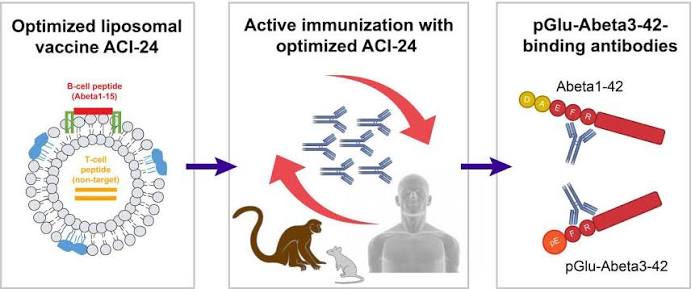
Clinical Data: Favorable Safety and Dose-Dependent Antibody Response
The ABATE trial is a randomized, double-blind, placebo-controlled study. The interim data released today covers 74 patients with prodromal AD across three initial dose cohorts (AD1, AD2, and AD3) who received 12 months of treatment.
Key clinical findings include:
-
Safety Profile: Throughout the 12-month treatment period, ACI-24 was generally safe and well-tolerated. Notably, there was no evidence of amyloid-related imaging abnormalities-edema (ARIA-E). Given that ARIA-E is a common and serious side effect of many currently marketed anti-Aβ monoclonal antibodies, the absence of this safety signal provides ACI-24 with a significant competitive advantage for future clinical application.
-
Dose-Dependent Antibody Response: Anti-Aβ antibody responses were detected at every dose level across the AD1–AD3 cohorts, demonstrating a clear dose-response trend. This confirms the therapy’s biological activity in successfully inducing an immune response.
Strategic Advancement: Initiating Cohort AD4 with Enhanced Adjuvants
While the initial three cohorts successfully validated the therapy's safety and immunogenicity, AC Immune has opted to further optimize the potential of ACI-24. Based on the interim results, the company has initiated ABATE Cohort AD4, which incorporates an additional adjuvant.
The adjuvant is designed to boost immunogenicity, thereby enabling the body to produce higher titers of high-affinity antibodies. This "antigen plus adjuvant" synergistic strategy aims to maximize the therapeutic window of ACI-24, potentially delivering more meaningful cognitive and pathological benefits to patients.
Strategic Partnership and Future Outlook
The development of ACI-24 represents not only a scientific milestone but also a prime example of successful collaboration between AC Immune and the global pharmaceutical leader Takeda. Under their exclusive worldwide option and license agreement, Takeda retains the rights to anti-Aβ active immunotherapies, including ACI-24.
The commercial potential of this partnership is substantial:
-
Milestones and Incentives: AC Immune has already received a $100 million upfront payment and a $12 million milestone payment triggered by the dosing of the first patient in Cohort AD4. The company is eligible for additional potential development, commercial, and sales-based milestones totaling approximately $2.1 billion, alongside tiered double-digit royalties on worldwide net sales.
-
Phased R&D Strategy: AC Immune is currently responsible for conducting the ABATE trial. Should Takeda exercise its option, it would assume responsibility for and fund all subsequent global clinical development, regulatory activities, and worldwide commercialization.
Conclusion
The treatment of Alzheimer’s disease has entered a sophisticated phase characterized by active immunization and precision intervention. By leveraging a unique active immunization mechanism against Aβ, ACI-24 not only bypasses the common ARIA-E safety risks associated with monoclonal antibody therapies but, through the introduction of potent adjuvants, is also moving closer to the goal of "durable and efficient plaque clearance."
For the millions of individuals living with Alzheimer’s, a successful ACI-24 program could mean a shift toward periodic active immunization, allowing for long-term, proactive disease management rather than relying solely on frequent, infusion-based monoclonal antibody regimens. As further data from the AD4 cohort emerge, the industry remains focused on the potential of this innovative therapy to change the trajectory of Alzheimer’s disease.
