
 2 min
2 minIn innovative drug project initiation, business development (BD), and competitive intelligence analysis, the greatest pitfall is “knowing only part of the whole picture.” To understand the true competitive landscape in a therapeutic area—such as a specific target or technology field—professional commercial databases are typically required, including Cortellis CCI, GlobalData, NextPharma, Pharmcube, Patsnap Synapse, and DXY Insight.
But have you considered that even with premium databases, you may still not see the full picture? We recently conducted a comprehensive survey of pipelines in small-cell lung cancer (SCLC). After manual cleaning and deduplication across sources, we identified1,341 pipelines in this field. Surprisingly, no single database covers all pipelines: individual coverage ranges from only 36% up to 57%.
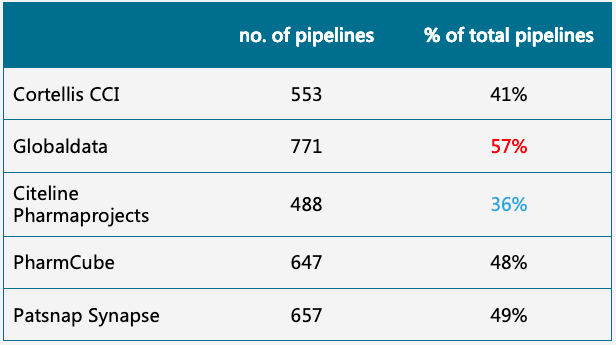
This means relying on just one source can leave you missing nearly half of all competitive intelligence.
- For BD teams, this could mean missing out on multibillion-dollar potential assets.
- For IP teams, it could mean overlooking critical patent infringement risks.
- For project initiation decisions, the resulting opportunity costs and sunk costs are substantial.
Why Do Databases Differ So Widely?
Based on years of research experience, we summarize two core reasons for incomplete database coverage:
Differences in Data Resources and Update Methods
- Cortellis uses an expert indexing process, with strengths in offline resources in Europe and the U.S. (academic conferences, BD meetings), but lacks a local indexing team in China.
- Pharmaprojects focuses on clinical-stage assets, often missing early academic pipelines.
- Pharmcube and WisdomTree provide more comprehensive coverage of China-based pipelines and can identify drug candidates from early patents.
Differences in Inclusion and Indexing Rules
- Some databases include biosimilars: CCI, GlobalData, and WisdomTree do so, while Pharmcube includes far fewer.
- Certain databases also include generic drugs, such as GlobalData.
- Indexing gaps: a drug may be present in the database but lack the proper tags to be retrieved.
For example, AdisInsight and GlobalData do not use the “T-cell engager (TCE)” tag.
In the SCLC pipeline data mentioned above, Pharmcube includes altretamine, DXC-1002, GI-101, and other agents but does not index the indication “small-cell lung cancer,” creating pipeline gaps.
How to Efficiently Obtain Complete New Drug Competitive Intelligence
The industry best practice for a full, holistic view is to subscribe to 2–3 complementary databases and then merge their pipeline data.
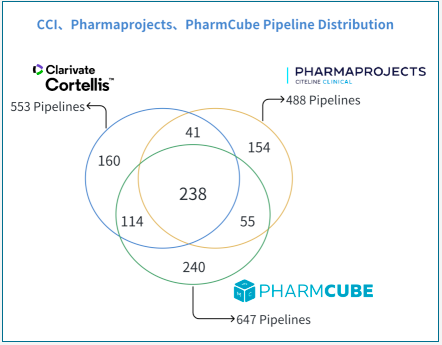
While this approach is established, it creates a new challenge: cumbersome data cleaning. Traditional merging requires intensive manual effort: aligning fields, translating between Chinese and English, and checking entries one by one for duplicates. Producing a polished Excel dataset often takes several days to a full week.
We have recently developed an AI tool dedicated to pipeline integration: Pharmato Integras, which reduces pipeline merging from days to just minutes.
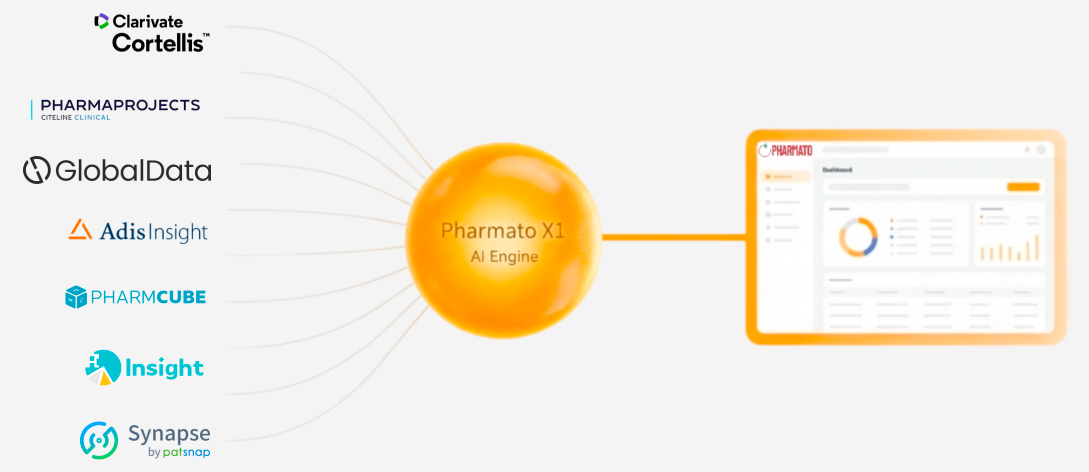
Users simply upload full Excel files downloaded from major drug databases (including Cortellis, Pharmcube, DXY, and others) to Yaofanqie Integras. The system automatically matches fields, deduplicates drug entries, and supports data export, delivering a complete set of competitive pipelines.