

 5 min
5 minOn June 26, 2026, clinical-stage biotechnology company Epicrispr Biotechnologies announced promising interim results from its ongoing Phase 1/2 first-in-human study of EPI-321, an investigational epigenetic gene therapy for facioscapulohumeral muscular dystrophy (FSHD). These data offer a beacon of hope for the estimated 870,000 people living with FSHD worldwide, as the results provide the first-ever clinical evidence that a therapeutic intervention can successfully increase lean muscle volume in patients with this progressive neuromuscular disorder.
A Clinical Breakthrough: Reversing Muscle Degeneration
The ongoing open-label Phase 1/2 study (NCT06907875) is designed to evaluate the safety, tolerability, and biological activity of EPI-321. As of the May 12, 2026, data cutoff, nine patients had been treated across two dosing cohorts. The primary focus of these interim results is on the first three evaluable patients from the target dose cohort (Cohort 1, 2×10¹³ vg/kg).
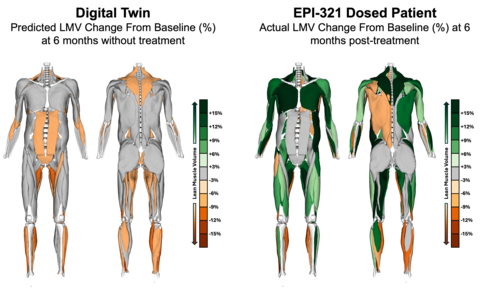
In contrast to the natural history of FSHD—where patients typically experience progressive muscle wasting over time—all three evaluable patients in Cohort 1 demonstrated consistent gains in lean muscle volume at six months post-treatment compared to baseline.
-
Quantitative Muscle Gains: On average, patients achieved an increase of approximately 370 mL (roughly 0.8 pounds) of lean muscle volume. Individual gains ranged from approximately 0.5 to 1.3 pounds.
-
Targeted Muscle Growth: High-resolution MRI analysis revealed that some specific muscle groups achieved lean muscle volume increases of up to 15%.
These findings represent a potential clinical milestone. When coupled with earlier reports of improvements in multiple strength and functional measures at the three-month mark, the data strongly suggest that EPI-321 possesses the capability to alter the underlying course of this previously untreatable disease.
Technological Innovation: Silencing the Genetic Driver via GEMS
FSHD is caused by the aberrant expression of the DUX4 gene. In healthy muscle tissue, DUX4 is normally silenced; however, in individuals with FSHD, this gene is activated, triggering a cascade of muscle damage, inflammation, and progressive degeneration.
EPI-321 is powered by Epicrispr’s proprietary Gene Expression Modulation System (GEMS) platform. Unlike traditional gene-editing tools that create permanent changes to the underlying DNA sequence, the GEMS platform uses epigenetic mechanisms to precisely regulate and durably silence disease-causing gene expression.
-
Durable Suppression: Delivered via a single intravenous infusion, EPI-321 is designed to provide long-lasting suppression of DUX4 activity, thereby offering durable protection against DUX4-driven muscle damage.
-
Biomarker Validation: The imaging findings are further corroborated by the reduction of a novel circulating cell-free DNA biomarker associated with DUX4 pathway activity. This molecular evidence aligns perfectly with the observed physical increases in muscle mass and functional improvements.
Expert Perspectives and Future Outlook
"For the first time, we are seeing clinical evidence that a therapy may suppress the genetic driver of FSHD and increase muscle volume," said Amber Salzman, Ph.D., CEO of Epicrispr Biotechnologies. "The alignment between imaging, biomarker, and functional data strengthens our confidence in the potential of EPI-321 to meaningfully alter the course of disease."
"Historically, we have had very limited ability to alter the course of the disease," noted Dr. Russell Butterfield, Principal Study Investigator and Associate Professor of Pediatrics & Neurology at the University of Utah. "Although these are early results and additional follow-up is needed, the observed changes in lean muscle volume are encouraging and suggest EPI-321 may be addressing the underlying drivers of disease in a way that could ultimately translate into meaningful benefit for patients."
Furthermore, the study utilized AI-powered whole-body MRI analysis provided by Springbok Analytics, which allowed researchers to objectively quantify volume changes across up to 140 individual muscles throughout the body—capturing treatment-related physiological changes that traditional assessments might miss.
EPI-321 has maintained a favorable safety profile with no serious adverse events reported to date. Epicrispr expects to present additional data at the World Muscle Society Annual Congress in September 2026 and aims to complete the primary portion of the study by mid-2027. If these results are sustained, EPI-321 stands to redefine the standard of care for patients who have long faced the prospect of progressive, irreversible muscle loss.
