

 5 min
5 minGenentech, a member of the Roche Group, recently announced breakthrough positive results from its global Phase 3 clinical study (Krascendo 1) evaluating divarasib, its next-generation, highly selective KRAS G12C inhibitor.
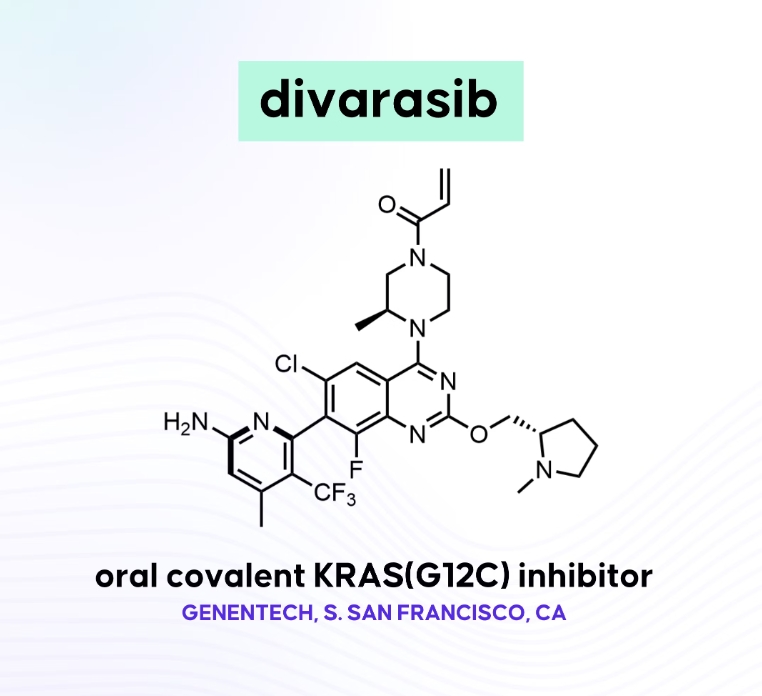
In a head-to-head study involving patients with previously treated, KRAS G12C-mutated advanced or metastatic non-small cell lung cancer (NSCLC), divarasib successfully met its primary and key secondary endpoints. The results demonstrate the drug's immense potential as a "Best-in-Class" therapy, outperforming first-generation KRAS G12C inhibitors (sotorasib or adagrasib).
Clinical Data: Dual Gains in PFS and OS Rewrite Survival for Poor-Prognosis Populations
KRAS G12C mutations, occurring in approximately 14% of NSCLC cases, lead to the continuous activation of tumor growth signaling pathways, resulting in poor patient outcomes and a high unmet clinical need.
The Krascendo 1 trial (NCT06497556) is a global, multicenter, randomized, open-label Phase 3 study that enrolled 338 adult patients with advanced or metastatic KRAS G12C-mutated NSCLC who were receiving second-line therapy. Patients were randomized to receive either divarasib (once-daily monotherapy) or the control arm (sotorasib once-daily or adagrasib twice-daily). The primary endpoint was progression-free survival (PFS) as assessed by Blinded Independent Central Review (BICR).
Key Clinical Highlights:
-
Significant PFS Extension: Divarasib achieved a clinically meaningful and statistically significant improvement in PFS compared to the first-generation inhibitor control group.
-
OS Target Met at Interim Analysis: In this population with historically poor prognosis, divarasib reached statistical significance for overall survival (OS) at the time of the interim analysis.
-
Favorable Safety Profile: The safety profile of divarasib remained consistent with data from previous clinical trials, with no new safety signals identified. Most adverse reactions were reversible and manageable.
Dr. Levi Garraway, Chief Medical Officer and Head of Global Product Development at Genentech, stated: "The superior survival benefits demonstrated by divarasib in this global head-to-head comparison confirm its potential to improve clinical outcomes for patients with KRAS G12C-mutated lung cancer. These data position divarasib to potentially establish a new standard of care for patients with this mutation who have progressed on prior therapies."
Mechanistic Advantage: Superior Potency and Selectivity
Traditional KRAS proteins were long considered "undruggable" due to the lack of an ideal small-molecule binding pocket. The G12C mutation locks the KRAS protein in an active ("On") state, inducing sustained proliferative signaling.
As a next-generation oral small molecule, divarasib is designed to selectively bind the KRAS G12C protein, locking it firmly in an inactive ("Off") state to block downstream oncogenic signaling pathways. In preclinical studies, divarasib exhibited higher binding affinity (potency) and more stringent selectivity compared to first-generation products (sotorasib and adagrasib)—the fundamental molecular mechanism behind its success in the head-to-head Phase 3 trial.
In recognition of its significant clinical potential, the FDA granted divarasib Breakthrough Therapy Designation in 2022 and Orphan Drug Designation in 2026 for the treatment of KRAS G12C-mutated NSCLC.
Strategic Pipeline: Building the "Krascendo" Full-Scale Development Program
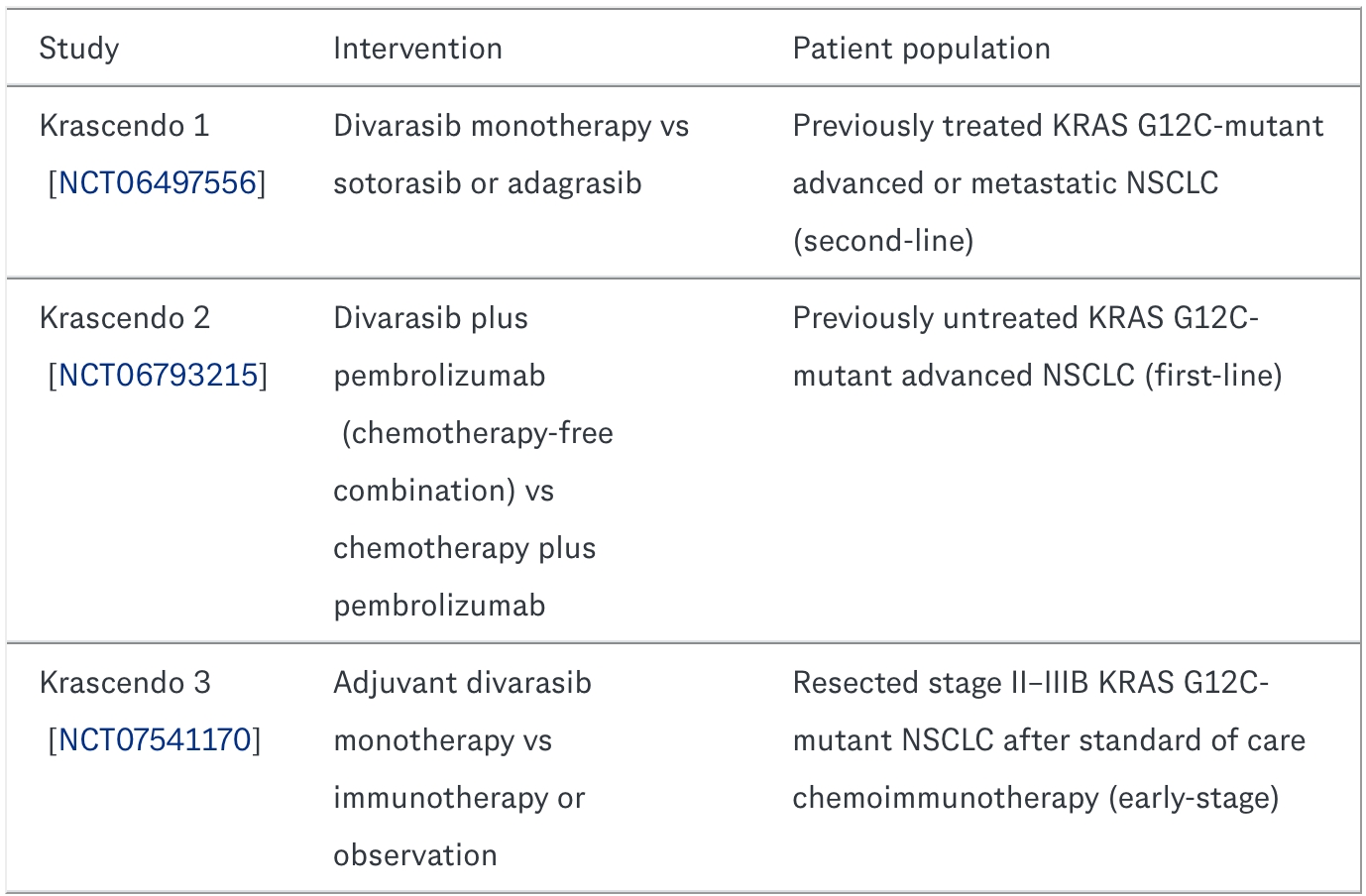
To bring this innovation to earlier lines of therapy and achieve comprehensive lung cancer management, Genentech is advancing a robust Phase 3 clinical development program covering both monotherapy and innovative "chemotherapy-free" combination regimens.
Conclusion and Outlook
As a global leader in oncology, Roche/Genentech has been at the forefront of lung cancer precision medicine for 30 years. The robust data from the Krascendo 1 trial not only signal a transition from "first-generation" to "next-generation" KRAS G12C targeting but also bring hope for longer survival to tens of thousands of patients with advanced, mutation-driven lung cancer worldwide.
Roche plans to present detailed molecular and survival data from the Krascendo 1 study at an upcoming international medical congress and will simultaneously submit marketing applications to global regulatory authorities, including the FDA and EMA, to accelerate the commercialization of this potential Best-in-Class therapy.
