

 5 min
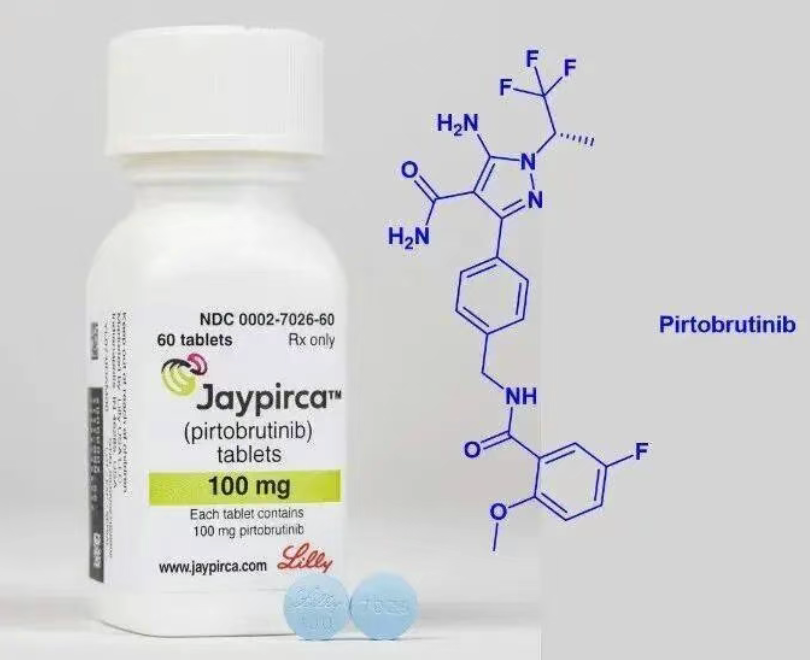
5 minEli Lilly and Company recently announced positive results from the pivotal Phase 3 BRUIN CLL-322 study, demonstrating that its non-covalent BTK inhibitor, Jaypirca (pirtobrutinib), provides superior clinical benefit when used in combination with venetoclax and rituximab for the treatment of chronic lymphocytic leukemia (CLL) and small lymphocytic lymphoma (SLL).
Key Data: A 45% Reduction in the Risk of Progression or Death
The BRUIN CLL-322 study is the first Phase 3 trial in CLL to demonstrate the superiority of a combination regimen over a venetoclax-containing control arm. The study enrolled 639 patients with relapsed or refractory CLL/SLL, nearly 80% of whom had been previously treated with a covalent BTK inhibitor—a population that closely reflects the current real-world clinical landscape.
-
Potent Disease Control: The study met its primary endpoint. Data assessed by an independent review committee (IRC) showed that adding Jaypirca to the venetoclax plus rituximab (VR) regimen (the PVR regimen) reduced the risk of disease progression or death by 45% (HR=0.55; p=0.0001).
-
Significant Survival Advantage: At a median follow-up of 27.3 months, the median progression-free survival (PFS) in the PVR arm had not been reached, whereas the control arm (VR alone) showed a median PFS of 39.7 months.
-
Consistent Benefit for High-Risk Groups: The combination demonstrated consistent efficacy across prespecified subgroups, including patients who were resistant to prior covalent BTK inhibitors and those with high-risk features such as TP53 mutations, 17p deletions, or complex karyotypes.
Notably, in an exploratory analysis of second-line patients, the PVR regimen demonstrated powerful efficacy: the 24-month PFS rate reached 88%, significantly higher than the 52% observed in the control group, with a 68% reduction in the risk of disease progression (HR=0.32).
Optimizing Treatment: Establishing a New Standard of Care
"These results from BRUIN CLL-322 provide robust evidence that adding Jaypirca to a time-limited combination regimen not only enhances efficacy but also extends the duration of remission," said Dr. Matthew S. Davids, Chief of the Division of Lymphoma at the Dana-Farber Cancer Institute and the study's lead author. "For CLL patients, time-limited regimens provide valuable treatment-free intervals, which are essential for improving long-term quality of life."
The safety profile was equally encouraging. Data indicated that the addition of Jaypirca to the venetoclax/rituximab regimen did not result in an increased burden of additive toxicity, with rates of Grade 3 or higher adverse events (AEs) remaining consistent between the PVR group (78.8%) and the VR group (73.0%).
Furthermore, the combination strategy offered secondary safety benefits: through a strategic sequencing of drug administration, the regimen effectively reduced the risk of tumor lysis syndrome (TLS), significantly enhancing safety for high-risk patients during the initiation phase.
Lilly’s Precision Strategy: Advancing the Oncology Frontier
As a core asset in Lilly’s oncology portfolio, the value of Jaypirca continues to grow as the company advances multiple Phase 3 programs. The success of BRUIN CLL-322 provides compelling scientific evidence for further label expansion, reinforcing Jaypirca’s role as a versatile tool—from monotherapy to combination regimens—across the full spectrum of CLL care.
"These remarkable findings support the potential addition of Jaypirca to time-limited, venetoclax-based regimens," said Jacob Van Naarden, President of Lilly Oncology. "As the CLL treatment landscape evolves, providing highly effective and well-tolerated second-line options is critical to improving patient outcomes."
Lilly plans to submit these results to global regulatory authorities with the goal of expanding the drug's label to benefit a broader population of relapsed or refractory CLL/SLL patients. With the study highlighted as a late-breaking oral presentation at the 2026 European Hematology Association (EHA) Annual Meeting, the data are expected to significantly influence hematology clinical practice, offering a new turning point for patients facing these challenging malignancies.
