

 5 min
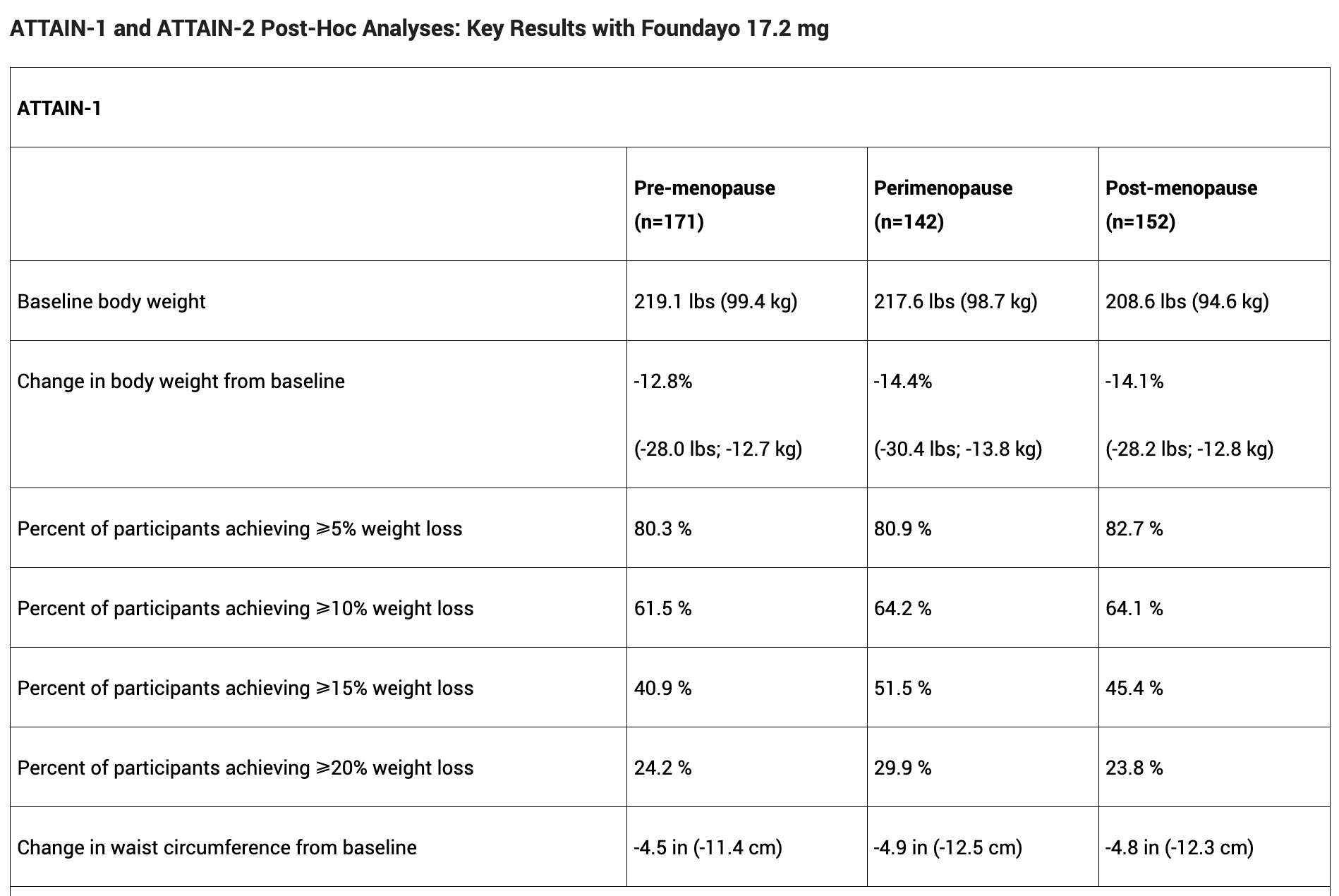
5 minAt the 86th Scientific Sessions of the American Diabetes Association (ADA) in 2026, Eli Lilly and Company presented the latest subgroup analysis of its oral GLP-1 receptor agonist, Foundayo (orforglipron), specifically evaluating efficacy across different menopausal stages. The results demonstrate that overweight or obese women—whether premenopausal, perimenopausal, or postmenopausal—achieved significant and sustained weight loss while taking Foundayo. Notably, perimenopausal women experienced an average weight reduction of 14.4% (over 30 lbs or 13.8 kg) at 72 weeks.
For menopausal women, a demographic long considered one of the most challenging for weight management, these results further validate the potential of orforglipron and provide robust new evidence-based support for obesity management in this population.
Clinical Evidence: A "Weight Loss Breakthrough" Across Menopausal Stages
The findings are based on post-hoc analyses of more than 1,500 female participants from the two pivotal Phase 3 trials, ATTAIN-1 and ATTAIN-2. As the world’s first once-daily, non-peptide, oral small-molecule GLP-1 receptor agonist that requires no food or water restrictions, Foundayo’s broad-spectrum weight loss capability is compelling.
In these 72-week trials, women receiving the highest dose of Foundayo (17.2 mg) showed significant results:
-
ATTAIN-1 (Non-diabetic population): Women in the premenopausal, perimenopausal, and postmenopausal stages achieved average body weight reductions of 12.8% (28.0 lbs), 14.4% (30.4 lbs), and 14.1% (28.2 lbs), respectively. Notably, more than half (51.5%) of the perimenopausal participants achieved a weight loss of ≥15%.
-
ATTAIN-2 (Type 2 diabetes population): Despite the metabolic challenges of living with type 2 diabetes, patients still achieved significant weight improvement. The premenopausal, perimenopausal, and postmenopausal cohorts saw weight reductions of 11.3%, 8.9%, and 13.6%, respectively. Among postmenopausal participants, 44.2% achieved ≥15% weight loss.
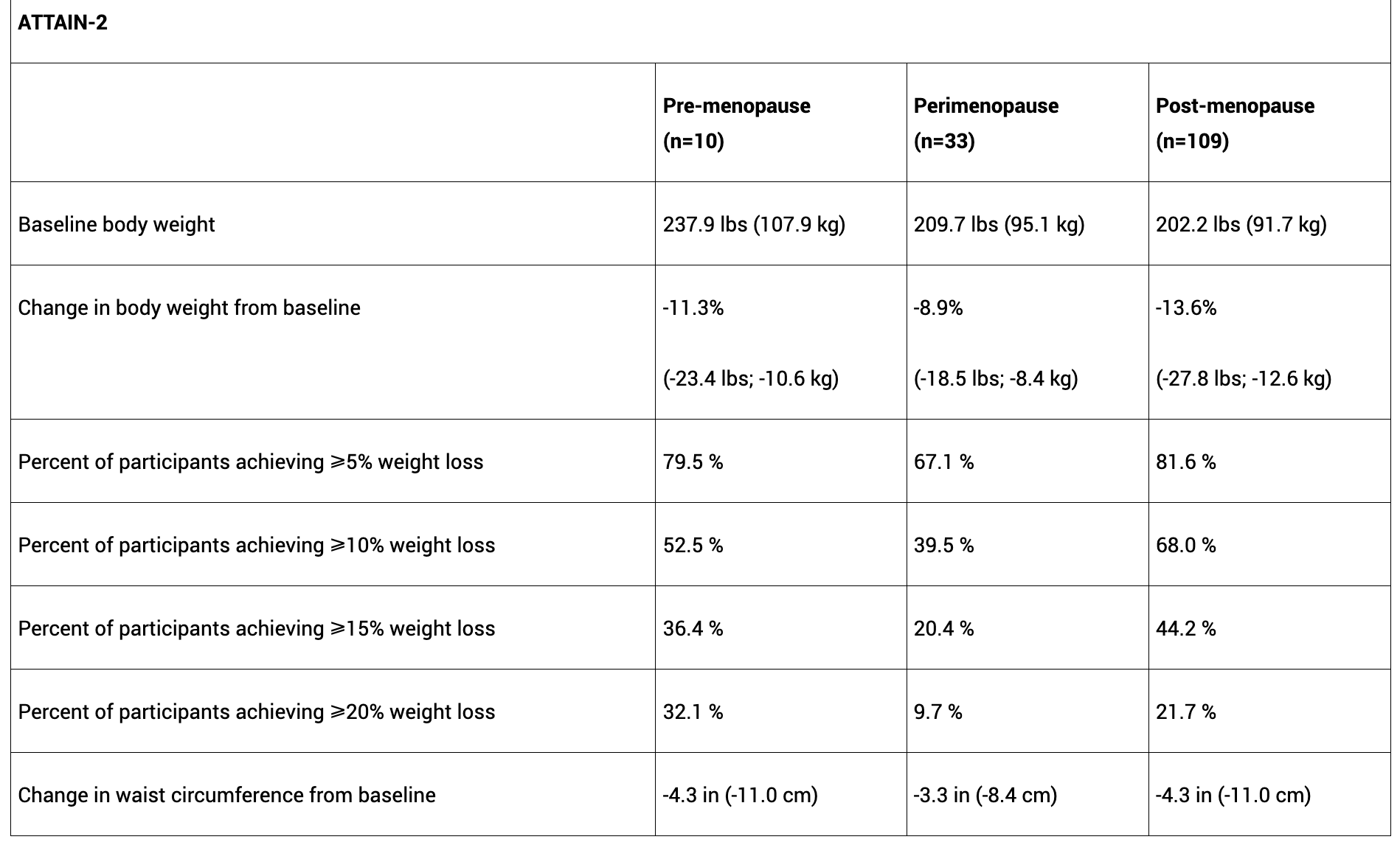
Beyond weight metrics, Foundayo demonstrated exceptional results in improving metabolic risk factors. Participants across all menopausal stages experienced meaningful reductions in waist circumference, with a decrease of up to 4.9 inches (12.5 cm) in the ATTAIN-1 trial. A significant reduction in waist circumference is a critical indicator for lowering abdominal fat and reducing cardiometabolic risk, suggesting that Foundayo provides deep, comprehensive health benefits beyond simple weight loss.
Breaking the "Menopausal Curse": Why Foundayo Succeeds
Weight gain is one of the most common health concerns for women during midlife. As ovarian function declines and estrogen levels drop, women often experience a shift in body composition: fat tends to accumulate more readily in the abdominal area, basal metabolic rate decreases, and insulin sensitivity weakens. These physiological shifts not only increase the difficulty of losing weight but also raise the risk of developing type 2 diabetes, cardiovascular disease, hypertension, and metabolic syndrome.
Despite tens of millions of women navigating this physiological transition, the impact of menopausal status on obesity treatment efficacy has historically been rarely evaluated in clinical trials.
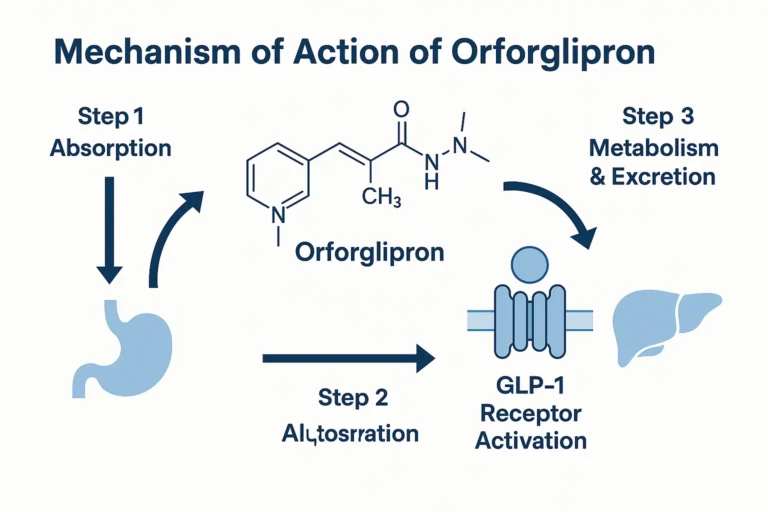
Foundayo’s greatest advantage as a small-molecule oral drug lies in its flexible administration—it can be taken at any time of the day without restrictions on food or water intake. This convenience significantly enhances long-term adherence, which is vital for the chronic management required to maintain weight loss.
Future Outlook: From Weight Management to Multidimensional Health
As a highlight of Lilly’s innovation pipeline, Foundayo’s potential extends well beyond chronic weight management. Based on current research programs, Lilly is exploring the drug's potential in several key areas:
-
Metabolic Diseases: Including the treatment of type 2 diabetes.
-
Comorbidities: Potential applications for obstructive sleep apnea, osteoarthritis knee pain, hypertension, peripheral artery disease, and stress urinary incontinence.
The emergence of Foundayo may signal a new era of "precision and convenience" in weight management. For the millions of women navigating menopause and its associated health risks, this represents more than just a reduction in body weight—it is a critical turning point for restoring metabolic health and reclaiming control over their well-being.
