

 5 min
5 minChronic Hepatitis B (CHB) treatment has long been trapped in a clinical dilemma, characterized by the necessity for lifelong medication and extremely low functional cure rates. Recently, GSK announced positive results from two pivotal Phase III clinical trials (B-Well 1 and B-Well 2) for its investigational antisense oligonucleotide (ASO) drug, bepirovirsen. These findings were simultaneously published in the New England Journal of Medicine (NEJM) and presented at the European Association for the Study of the Liver (EASL) congress.
I. Key Clinical Data: Significantly Improved Functional Cure Rates
The core mechanism of bepirovirsen involves identifying and inhibiting the RNA required for hepatitis B virus (HBV) replication. By reducing hepatitis B surface antigen (HBsAg) levels, the drug assists the patient's immune system in regaining control over the virus.
The two trials enrolled patients with chronic hepatitis B and a baseline HBsAg level of ≤3000 IU/mL to evaluate the efficacy and safety of a 6-month treatment course. The core findings are as follows:
-
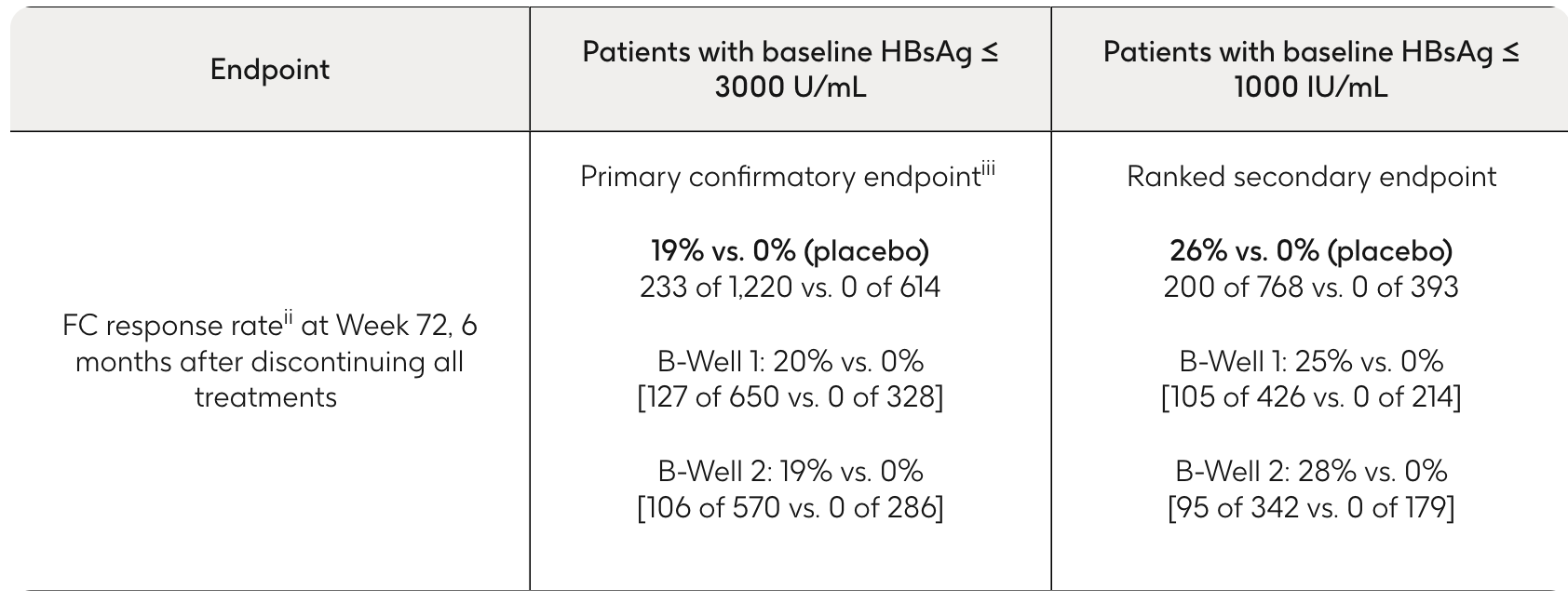
Overall Population (Baseline HBsAg ≤3000 IU/mL): The bepirovirsen group achieved a 19% functional cure rate, compared to 0% in the placebo control group (p<0.001).
-
Key Subgroup (Baseline HBsAg ≤1000 IU/mL): This subgroup represents approximately 45% of diagnosed chronic hepatitis B patients globally. In this group, the functional cure rate reached 26% with bepirovirsen, versus 0% for the placebo group (p<0.001).
Functional Cure Definition: This is defined as the inability to detect HBsAg and HBV DNA in the blood for at least 6 months after stopping all treatment, indicating that the disease is controlled by the immune system without medication. Current standard-of-care antiviral therapies achieve this goal in less than 1% of patients.
Additionally, exploratory analysis showed that 49% of bepirovirsen recipients achieved serum quantitative HBsAg (qHBsAg) levels of ≤100 IU/mL one year after treatment ended. Medical evidence suggests that this degree of antigen clearance is directly associated with enhanced immune control and improved patient prognosis.
II. Therapeutic Significance: Reducing Risks of Liver Cancer and Mortality
According to clinical studies, the loss of HBsAg is viewed as a critical turning point in the remission of liver disease. Data show that HBsAg seroclearance is associated with an 89% reduction in liver cancer risk and a 62% reduction in all-cause mortality.
Professor Jinlin Hou, Director of the Guangdong Institute of Hepatology and an author of the NEJM manuscript, stated: "The current standard of care for CHB imposes a heavy burden on patients and healthcare systems, and rarely delivers a functional cure. With recent clinical guidelines now prioritizing functional cure as a treatment goal, the data from bepirovirsen represent a significant advancement in therapeutic philosophy."
III. Safety and Development Progress
Bepirovirsen demonstrated a favorable safety and tolerability profile in both Phase III trials. The most frequently observed adverse events were injection site erythema, local pain, and temporary elevations in liver enzymes, consistent with safety characteristics observed in previous studies.
Currently, bepirovirsen has received Breakthrough Therapy Designation and Priority Review status from the U.S. FDA, and is undergoing regulatory review in China, Japan, and Europe. The first global regulatory decisions are expected in the third quarter of 2026.
To accelerate clinical accessibility for patients in China, GSK entered into a strategic collaboration with Sino Biopharmaceutical in May 2026, aimed at accelerating the supply and promotion of the drug in China immediately upon its market launch.
About the Trial Design (B-Well 1 & 2): These global, multi-center, randomized, double-blind, placebo-controlled trials were conducted across 29 countries. The studies assessed the efficacy, safety, and durability of functional cure in adult participants with chronic hepatitis B receiving nucleos(t)ide analogue therapy with a baseline HBsAg of ≤3000 IU/mL. As an innovative therapy precisely targeting HBV RNA, bepirovirsen provides a robust scientific basis for achieving immune control without the need for lifelong medication.
