

 5 min
5 min 2 files
The New England Journal of Medicine (NEJM) recently published the results of the Ez-PAVE trial. This article interprets the key data from the study to further explore core pain points in the cardiometabolic market and opportunities for pipeline positioning.
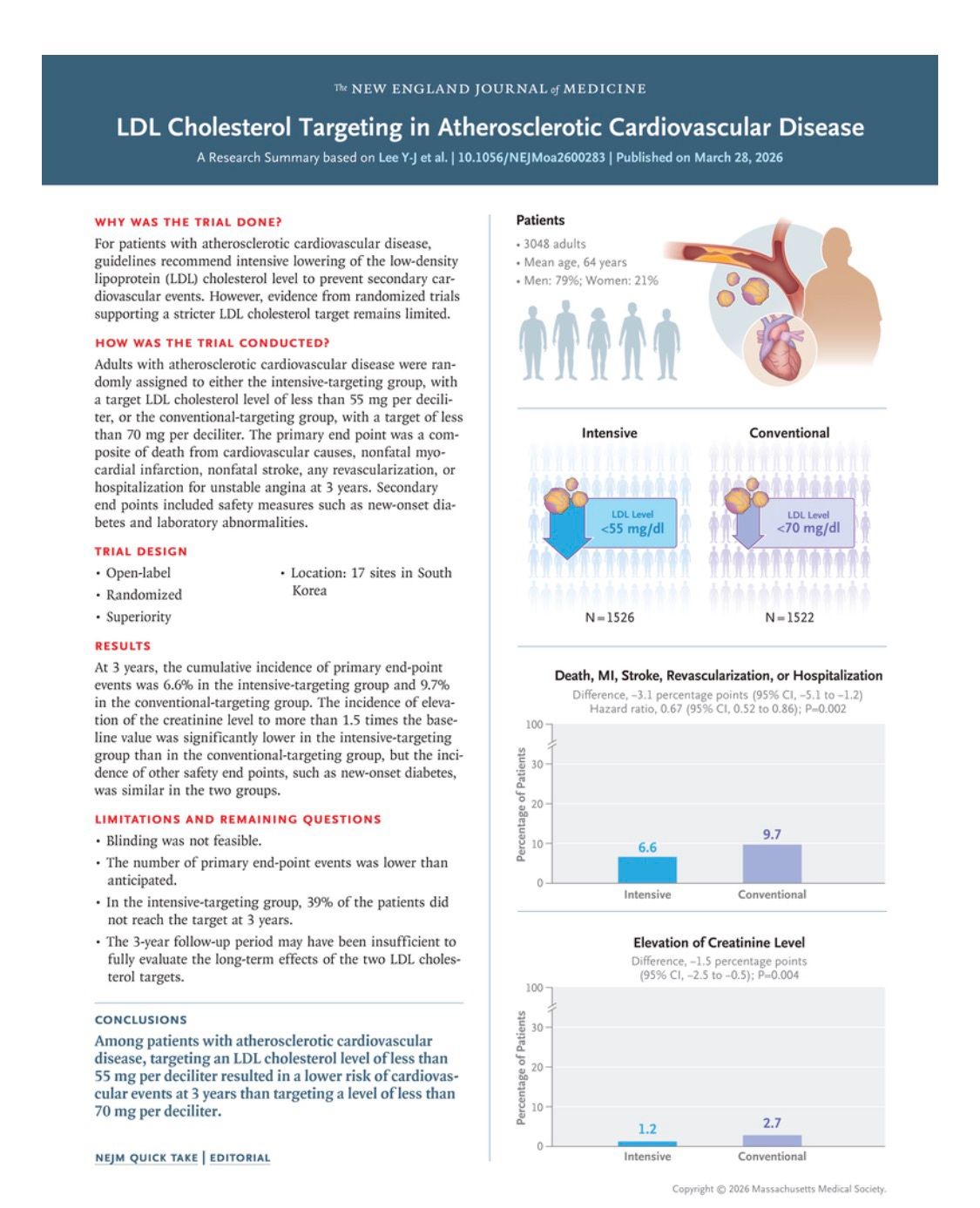
The Ez-PAVE Trial
Ez-PAVE was an investigator-initiated, open-label, multicenter, randomized superiority trial conducted in South Korea. Focused on patients with atherosclerotic cardiovascular disease (ASCVD), the study revealed that targeting a low-density lipoprotein (LDL) cholesterol level of < 55 mg/dL (1.4 mmol/L) is superior to the traditional target of < 70 mg/dL (1.8 mmol/L).
-
Patient Base: 3,048 patients with confirmed ASCVD were enrolled and randomized 1:1.
-
Medication Strategy: Primary reliance on statin monotherapy or statin combined with ezetimibe.
-
Follow-up: Median follow-up period of 3 years.
Clinical Data
The results were definitive: intensive lipid-lowering (< 55 mg/dL) significantly outperformed conventional lipid-lowering (< 70 mg/dL).
-
Substantial Reduction in Composite Endpoints: At the 3-year follow-up, the primary endpoint rate (cardiovascular death, non-fatal myocardial infarction, non-fatal stroke, any revascularization, or hospitalization for unstable angina) was 6.6% in the intensive-target group compared to 9.7% in the conventional-target group.
-
Risk Reduction: The intensive group saw a significant 33% reduction in relative risk (Hazard Ratio [HR]: 0.67; 95% CI: 0.52-0.86; P=0.002).
-
Excellent Safety Profile: There were no significant differences between the two groups regarding prespecified safety endpoints (e.g., new-onset diabetes, muscle symptoms, or elevated transaminases). Notably, the incidence of elevated creatinine was actually lower in the intensive-target group (1.2% vs. 2.7%; P=0.004).
From Clinical Pain Points to R&D Opportunities
Despite the superior clinical data, 39% of patients in the intensive group failed to reach the < 55 mg/dL target at the 3-year mark. This indicates that the traditional "high-dose statin + ezetimibe" toolkit has hit an efficacy ceiling. For ASCVD patients requiring long-term management, there is an urgent need for improved compliance and more potent lipid-lowering options.
-
Development of Non-Statin Innovative Drugs: In the trial, the utilization rate of PCSK9 inhibitors in the intensive group was only 2.3% at year three. This is often limited by reimbursement policies and high treatment costs.
-
Next-Generation PCSK9: The market currently demands lipid-lowering drugs that are longer-acting (e.g., improved accessibility to semi-annual siRNA therapies like the already-marketed Inclisiran sodium), more convenient (e.g., oral small-molecule PCSK9 inhibitors), and more cost-effective to break the prescription barriers of monoclonal antibodies.
-
New Target Positioning: For patients with statin intolerance or residual cardiovascular risk, pipelines targeting new markers such as Lp(a) and ANGPTL3 will become key strategic battlegrounds.
-
Exploration of "Extreme High-Risk" Populations: Latest guidelines are beginning to recognize an LDL-C target of < 40 mg/dL for extreme high-risk patients. If a target of 55 already stretches traditional drugs to their limit, a target of 40 will inevitably reshape the competitive landscape of the lipid-lowering market.
