

 5 min
5 minEli Lilly and Company announced positive topline results from TRIUMPH-1, a Phase 3 clinical trial evaluating the efficacy and safety of retatrutide, an investigational, first-in-class GIP, GLP-1, and glucagon triple hormone receptor agonist, in adults with obesity or overweight without diabetes. The results demonstrate that retatrutide achieves profound weight reduction over 80 weeks, with efficacy levels that rival those traditionally associated with bariatric surgery.
Key Clinical Data: Breaking the Weight Loss Ceiling
TRIUMPH-1 was an 80-week, randomized, double-blind, placebo-controlled registrational study designed to assess the efficacy and safety of multiple retatrutide doses.
1. 80-Week Primary Endpoint (Efficacy Estimand)
-
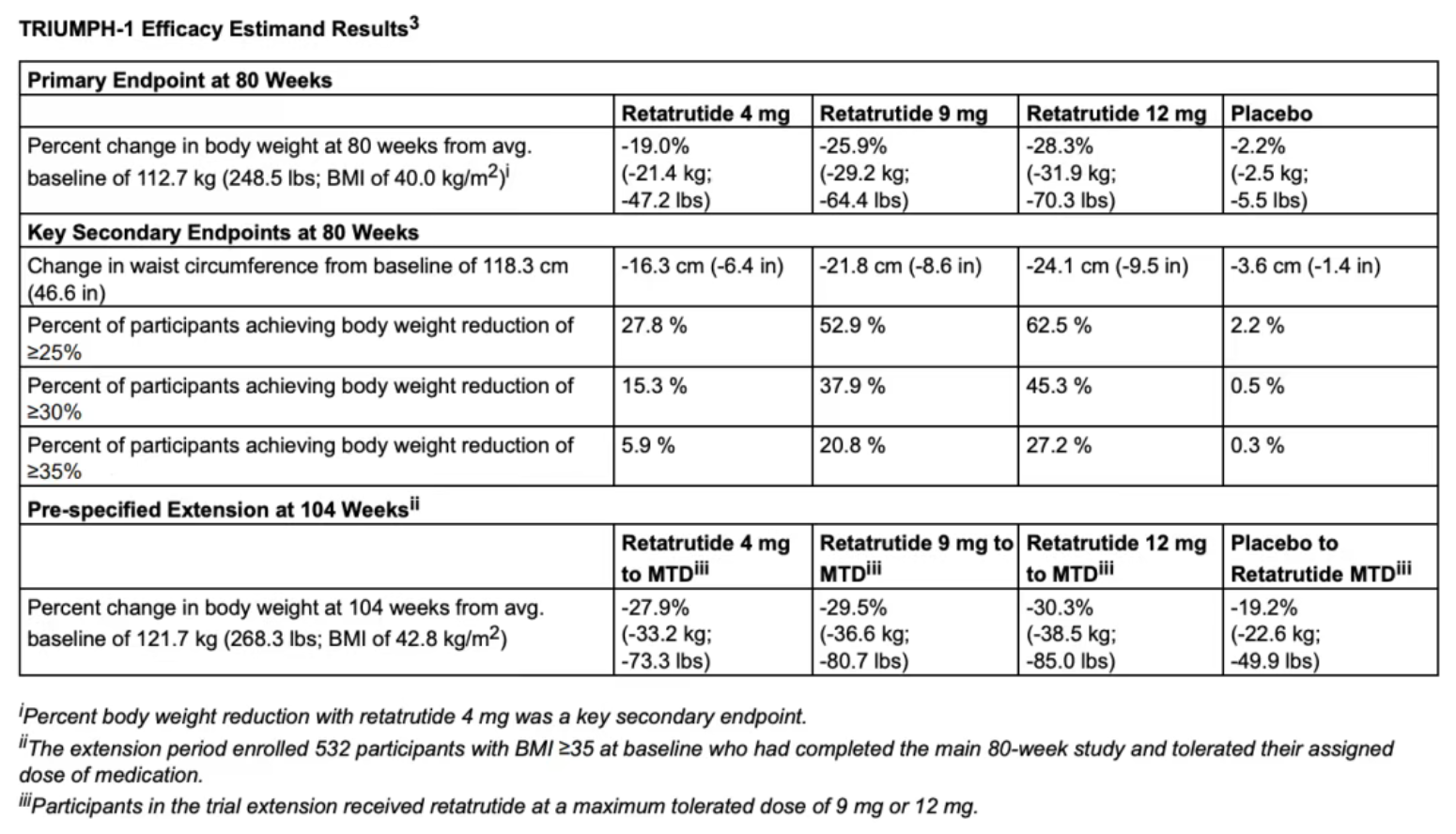
Dose-Dependent Weight Loss: Patients treated with 4 mg, 9 mg, and 12 mg of retatrutide experienced average weight reductions from baseline of 19.0% (-47.2 lbs), 25.9% (-64.4 lbs), and 28.3% (-70.3 lbs), respectively, compared to -2.2% in the placebo group.
-
Depth of Response: In the 12 mg dose group, 45.3% of participants achieved weight loss of ≥30%, a magnitude of efficacy previously reserved for surgical interventions.
2. Long-Term Extension: Sustained Benefit at 104 Weeks
In a pre-specified extension study for participants with a baseline BMI ≥35, continued treatment with retatrutide (at a maximum tolerated dose of 9 mg or 12 mg) resulted in further weight loss:
-
12 mg Group: Average weight reduction reached 30.3% (-85.0 lbs).
-
These findings underscore the potential of the triple-agonist mechanism in achieving and maintaining significant weight management over two years.
Pharmacological Mechanism: The Triple Agonist Synergy
Retatrutide’s unique triple-action mechanism differentiates it from current single or dual-target incretin therapies:
-
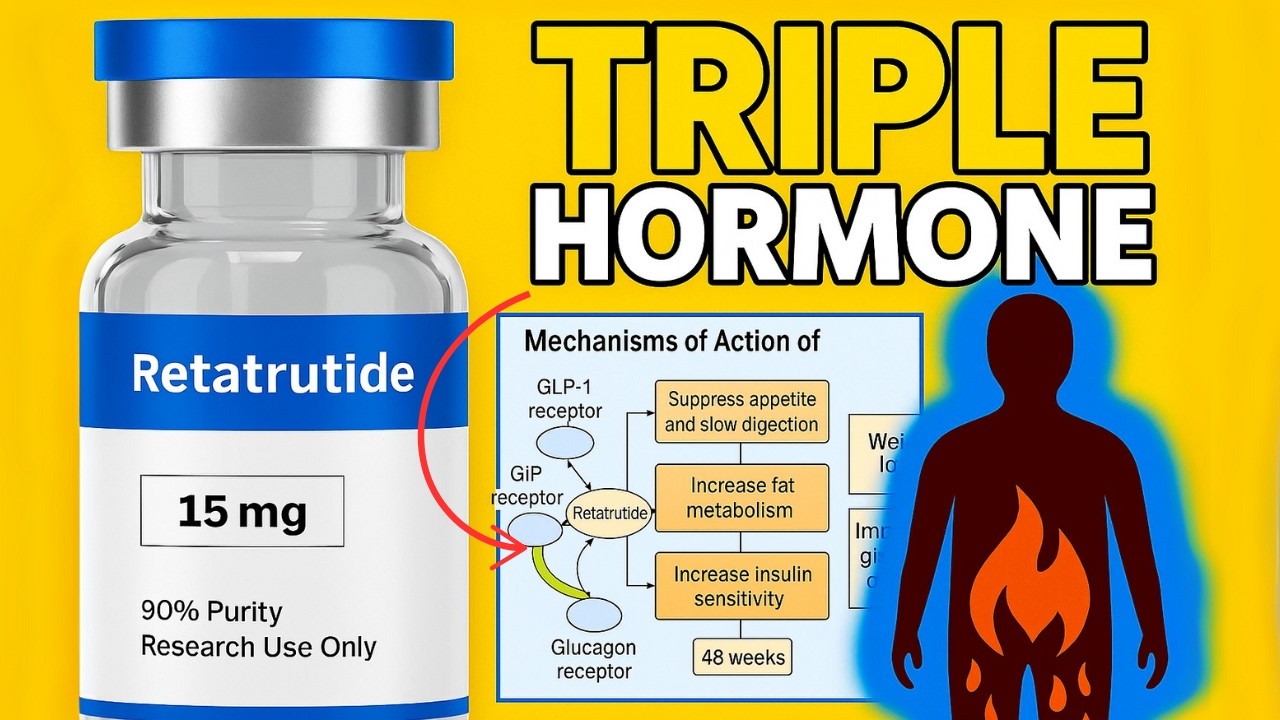
GIP and GLP-1 Receptor Agonism: Modulates appetite centers, delays gastric emptying, and enhances insulin secretion.
-
Glucagon Receptor Agonism: Promotes increased energy expenditure, which may help elevate resting metabolic rate and allow patients to break through the weight-loss plateaus often observed with other incretin therapies.
Beyond weight metrics, the study indicated significant improvements from baseline in cardiovascular metabolic risk factors, including waist circumference, non-HDL cholesterol, triglycerides, systolic blood pressure, and high-sensitivity C-reactive protein (hsCRP), highlighting broad cardiometabolic protection.
Safety Profile
Consistent with the class of incretin-based therapies, gastrointestinal (GI) events remained the primary safety consideration:
-
Adverse Events (AEs): The most common AEs included nausea, diarrhea, constipation, and vomiting. These were generally mild to moderate and tended to resolve over the duration of treatment.
-
Discontinuation Rates: Discontinuation rates due to AEs showed a dose-dependent increase (4.1% in the 4 mg group to 11.3% in the 12 mg group), which aligns with clinical expectations for this therapeutic class. Notably, the majority of participants successfully continued treatment despite these side effects.
R&D Perspective: A New Paradigm in Metabolic Therapy
The positive results from TRIUMPH-1 reinforce Eli Lilly’s leadership in the cardiometabolic space. Building on the success of Zepbound (tirzepatide), retatrutide offers a potential step-change in efficacy for patients who require higher weight reduction thresholds or who have not achieved their metabolic goals with current standards of care.
Key areas for continued monitoring:
-
Broader Registrational Data: Upcoming data from the TRIUMPH-2 (Type 2 diabetes) and TRIUMPH-3 (established cardiovascular disease) trials will be instrumental in defining retatrutide’s clinical positioning in more complex patient populations.
-
Specialized Indications: The results from the ongoing "basket" trials—evaluating the drug's impact on knee osteoarthritis pain and obstructive sleep apnea (OSA)—will be critical in determining whether retatrutide can transition from a primary weight-loss treatment to a comprehensive therapy for metabolic-associated comorbidities.
