

 5 min
5 minOn June 11, 2026, Takeda announced highly anticipated positive topline results from a Phase 3 head-to-head study. Its next-generation, highly selective TYK2 inhibitor, zasocitinib (TAK-279), demonstrated statistical superiority across all primary and key secondary endpoints when compared directly against deucravacitinib—the only currently approved TYK2 inhibitor on the market.
Most notably, at week 16, more than 35% of zasocitinib-treated patients achieved PASI 100 (complete skin clearance), a response rate more than 2.5 times higher than that observed in the deucravacitinib arm. For the oral psoriasis treatment market, where balancing efficacy with convenience has long been a challenge, these results signal a potential shift in the competitive landscape.
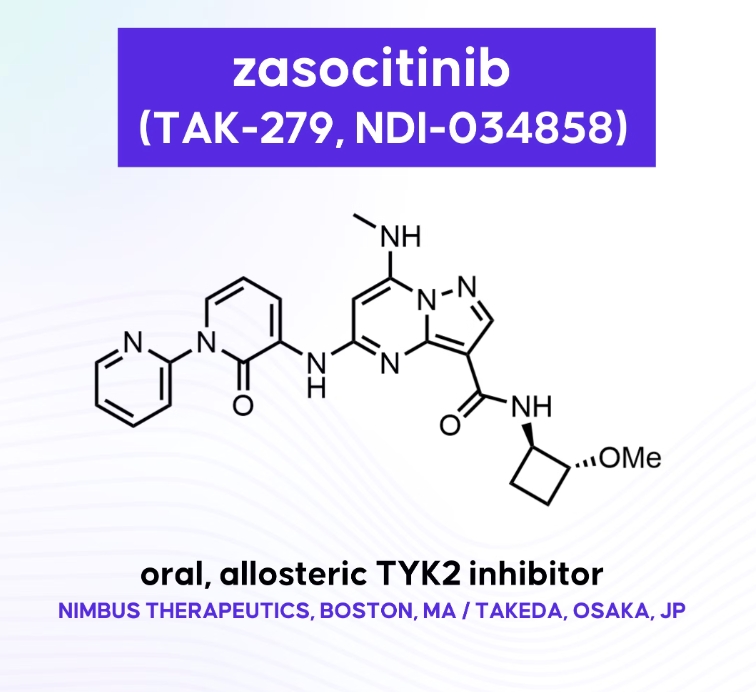
Clinical Data: Complete Skin Clearance Rates More Than 2.5x Higher
The LATITUDE Atlas study was a global, multicenter, randomized, double-blind Phase 3 trial designed to evaluate the efficacy, safety, and tolerability of zasocitinib (30 mg, once daily) versus deucravacitinib (6 mg, once daily) in adults with moderate-to-severe plaque psoriasis. The study enrolled 606 patients, and the top-line results were officially released this week.
Zasocitinib demonstrated overwhelming superiority across key efficacy metrics at week 16:
-
Complete Skin Clearance (PASI 100): More than 35% of patients in the zasocitinib group achieved complete skin clearance, a rate more than 2.5 times higher than that of the deucravacitinib group.
-
Rapid Onset: Therapeutic separation between the zasocitinib and deucravacitinib curves was evident as early as week 8, highlighting the drug’s potential for rapid symptom relief.
-
Comprehensive Success: Zasocitinib achieved statistical superiority in all key secondary endpoints, including PASI 90 (a 90% improvement in skin lesions) and sPGA 0 (a static Physician's Global Assessment score of clear).
"In this head-to-head study, zasocitinib clearly demonstrated superior skin clearance compared with deucravacitinib, highlighting clinically meaningful differences within the oral treatment class," said Dr. Linda Stein Gold, Director of Dermatology Clinical Research at Henry Ford Health and principal investigator for the LATITUDE Atlas study. "As expectations for oral therapies continue to rise, these findings support the potential of zasocitinib to help transform what patients and physicians can expect from an oral option in plaque psoriasis."
Precision Targeting: Why Zasocitinib Performs So Well
Psoriasis is a complex, immune-mediated inflammatory disease. As a member of the Janus kinase (JAK) family, TYK2 is a central mediator of the IL-23/IL-17 axis and type I interferon signaling pathways.
The development of zasocitinib is rooted in a "precision decoupling" strategy. Traditional JAK inhibitors often block multiple JAK enzymes, which can disrupt lipid metabolism and hematopoiesis, leading to potential cardiovascular or hematological side effects. Zasocitinib, however, achieves over 1-million-fold selectivity for TYK2. This allows for 24-hour uninterrupted inhibition of pathogenic inflammatory pathways while minimizing interference with other JAK enzymes. This highly selective, allosteric inhibition is the key driver behind its potent efficacy and robust safety profile.
A New Frontier: Takeda’s Strategic Pipeline
The success of this head-to-head study provides definitive evidence for zasocitinib’s regulatory filing and serves as a major boost to Takeda’s global immunology and inflammation pipeline.
"These findings reinforce the promise of zasocitinib to deliver rapid and durable skin clearance in a convenient once-daily pill and demonstrate the transformative potential of highly selective and potent TYK2 inhibition for patients suffering with plaque psoriasis," said Dr. Chinwe Ukomadu, senior vice president and head of the Gastrointestinal & Inflammation Therapeutic Area Unit at Takeda.
Takeda is currently on track to submit a New Drug Application (NDA) for zasocitinib to the U.S. FDA and other regulatory authorities within this fiscal year. Beyond plaque psoriasis, Takeda is aggressively expanding the drug’s development program:
-
Phase 3: Psoriatic arthritis.
-
Phase 2: Crohn’s disease, ulcerative colitis, vitiligo, and hidradenitis suppurativa (HS).
Driven by the needs of the approximately 64 million people living with psoriasis worldwide, zasocitinib’s combination of high efficacy, convenience, and selectivity is positioning it as a leading contender in the oral treatment landscape, potentially offering an optimal clinical choice that improves both long-term quality of life and therapeutic outcomes.
