

 5 min
5 minAs the 2026 American Society of Clinical Oncology (ASCO) Annual Meeting approaches, Tempus AI (NASDAQ: TEM), a leader in precision medicine, has announced that 37 of its research abstracts have been accepted for presentation. This marks the largest academic presence in Tempus' history, highlighting the cutting-edge application of AI algorithms and multimodal real-world data (RWD) in optimizing clinical workflows, discovering novel biomarkers, and guiding clinical decision-making.
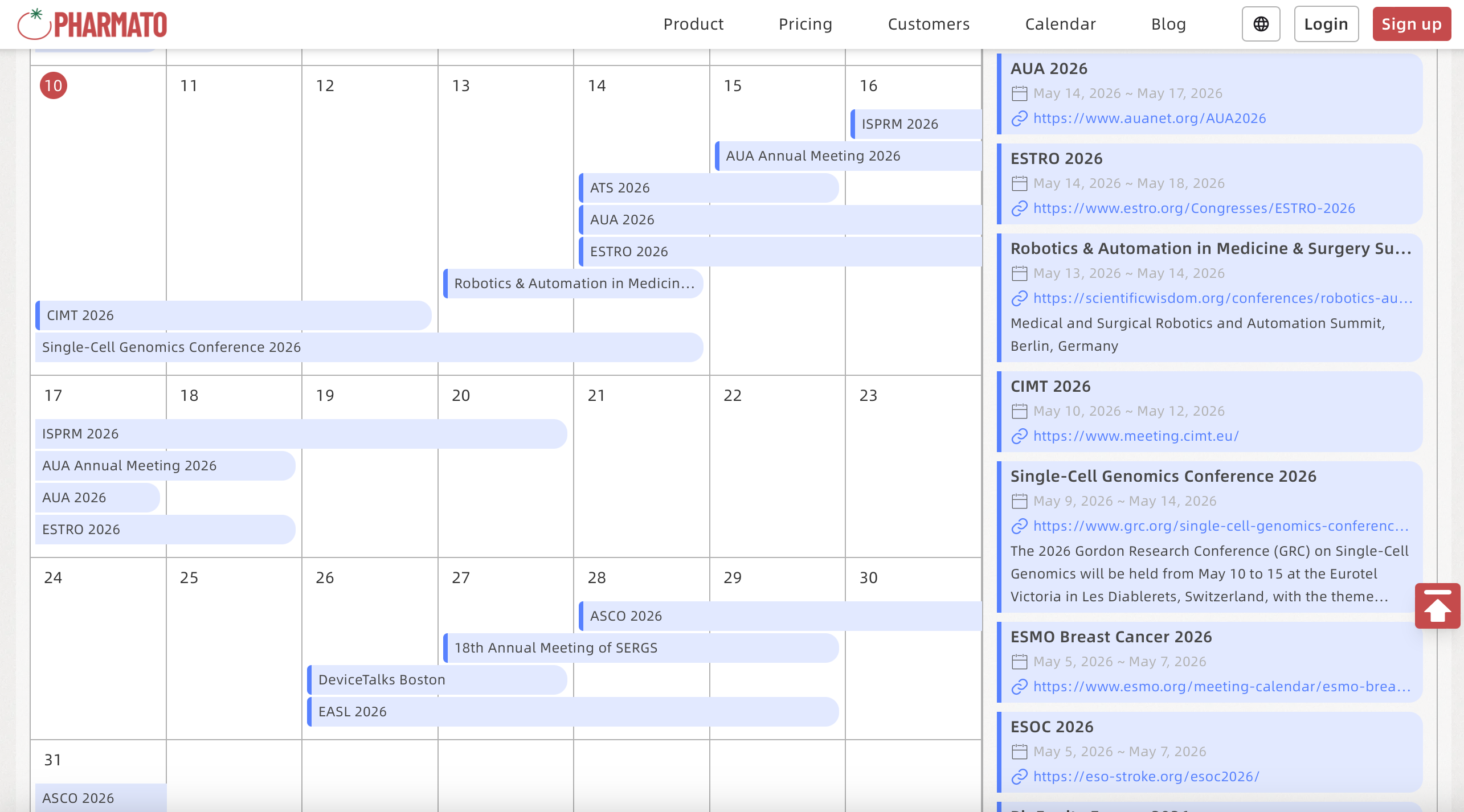
To track the latest ASCO updates, you can use the calendar feature on Pharmato:https://pharmato.ai/calendar
I. Image-Based AI Optimizes NGS Quality: Paige Predict Reduces "QNS" Failures by 20%
Next-Generation Sequencing (NGS) is the cornerstone of precision oncology, yet a major clinical challenge is failure due to insufficient nucleic acid quantity (QNS). With failure rates sometimes exceeding 20%, patients are often forced to undergo re-biopsies, leading to treatment delays. Although rescue interventions like extended de-crosslinking (EXT) can improve success rates for low-yield samples, they require precise triage to manage processing times.
Tempus, in collaboration with Paige, developed an AI system called Paige Predict (PP). This system analyzes digitized H&E-stained slides to predict NGS failures due to QNS and recommends optimal tissue input.
-
Internal Lab Validation: Significant Reduction in RNA and DNA Sequencing Failures Comparing a baseline period (July–Sept 2024, n=17,026) with an intervention period using PP-based automated routing (Oct–Nov 2025, n=12,975):
-
Sharp Decrease in QNS Rates: The PP-guided EXT workflow reduced the joint DNA+RNA QNS rate by 19.6% (p = 2.0e-9), with a Number Needed to Test (NNT) of 40.2 (i.e., for every 40.2 patients screened, one additional result was successfully rescued). In the NSCLC subgroup, the reduction reached 30.4% (NNT = 24.4).
-
RNA Sequencing Rescue: RNA QNS rates decreased by 15.9% (p = 1.1e-4).
-
Optimized Tissue Stewardship: Net tissue input was reduced by 16.7%, while the yield of total nucleic acid (TNA) within the optimal range (100–1500ng) increased by 19.0%.
-
-
Sharp Decrease in QNS Rates: The PP-guided EXT workflow reduced the joint DNA+RNA QNS rate by 19.6% (p = 2.0e-9), with a Number Needed to Test (NNT) of 40.2 (i.e., for every 40.2 patients screened, one additional result was successfully rescued). In the NSCLC subgroup, the reduction reached 30.4% (NNT = 24.4).
-
RNA Sequencing Rescue: RNA QNS rates decreased by 15.9% (p = 1.1e-4).
-
Optimized Tissue Stewardship: Net tissue input was reduced by 16.7%, while the yield of total nucleic acid (TNA) within the optimal range (100–1500ng) increased by 19.0%.
-
External Validation (Cedars-Sinai, n=1,082): Cross-Institutional Triage Potential
-
Precision Triage: In the external cohort, PP successfully identified 74% of samples that would fail Tempus' comprehensive genomic profiling (CGP, requiring >50ng input), suggesting they should be routed directly to local low-input sequencing.
-
Unlocking CGP Potential: PP assessments indicated that over 70% of samples sequenced locally with small panels could have succeeded with Tempus CGP, providing patients access to more comprehensive genomic profiling.
-
-
Precision Triage: In the external cohort, PP successfully identified 74% of samples that would fail Tempus' comprehensive genomic profiling (CGP, requiring >50ng input), suggesting they should be routed directly to local low-input sequencing.
-
Unlocking CGP Potential: PP assessments indicated that over 70% of samples sequenced locally with small panels could have succeeded with Tempus CGP, providing patients access to more comprehensive genomic profiling.
II. Platinum Response Prediction in Pancreatic Cancer: RNA-based HRD AI Algorithm Breaks Mutation Barriers
Metastatic pancreatic cancer lacks effective predictive diagnostic tools. Tempus introduced the HRD-RNA algorithm, a 1,660-gene AI logistic regression model trained on pan-cancer RNA-seq data. It is designed to identify patients with Homologous Recombination Deficiency (HRD) phenotypes who may benefit from platinum-based regimens or PARP inhibitors, even in the absence of BRCA1/2 or PALB2 mutations.
Clinical Validation (n=1,083 Treatment-Naïve Metastatic Pancreatic Cancer Patients):
-
Patient Identification: 9.5% of the total cohort was classified as HRD+ by the AI.
-
Survival Benefit in HRD+ Patients: Among AI-identified HRD+ patients, those treated with platinum regimens had a median Overall Survival (mOS) of 12.8 months, significantly better than the 8.5 months observed in the non-platinum arm (HR: 0.57; 90% CI: 0.33–0.99; p = 0.048).
-
No Difference in HRD- Group: In the HRD-negative group, no statistically significant difference in OS was observed between platinum (mOS 8.1 months) and non-platinum (mOS 7.6 months) arms.
-
Independent of Traditional Mutations: Within the platinum-treated arm, HRD+ patients who were BRCA/PALB2wild-type still achieved an mOS of 11.5 months, significantly outperforming HRD-negative wild-type patients (8.3 months). This algorithm substantially expands the population eligible for precision pancreatic cancer therapy.
III. Resistance Monitoring in Breast Cancer: Longitudinal Liquid Biopsy Reveals ESR1Mutation Dynamics
Researchers conducted longitudinal molecular monitoring of 301 HR+/HER2- metastatic breast cancer (mBC) patients treated with aromatase inhibitors (AI) plus CDK4/6 inhibitors (CDK4/6i) using the Tempus real-world database.
-
Mutation Rates and Polyclonality: 33.9% (102 patients) developed ESR1 mutations (ESR1m). Upon initial detection, 64.8% had a single monoclonal mutation (D538G at 31.9%, Y537S at 12.5%), while 34.7% exhibited polyclonality (presence of 2+ distinct ESR1 mutations).
-
Clonal Dynamics: Following a switch to new therapeutic strategies like SERDs, 36.1% of patients saw the disappearance of previously detected ESR1m clones (most commonly D538G and Y537N). Conversely, patients continuing on AI+CDK4/6i therapy frequently showed persistence or the emergence of new ESR1 mutations (including rare variants like V422del and H524L).
-
This study underscores the clinical value of longitudinal liquid biopsy surveillance in guiding later-line treatment adjustments.
IV. Clinical Strategy: First-Line Treatment Choices in BRAF-Mutated Differentiated Thyroid Cancer (DTC)
Using Tempus’s multimodal real-world database, researchers compared the effectiveness of first-line Lenvatinib (n=88) versus Dabrafenib plus Trametinib (D+T, n=54) in BRAF-mutated (V600E/K601E) radioactive iodine-refractory (RAI-R) DTC.
In a balanced cohort of 142 patients (median follow-up 33.6 months):
-
Real-World PFS (rwPFS): The Lenvatinib arm reached 17.0 months, significantly outperforming the D+T arm at 6.2 months (HR: 0.44; 95% CI: 0.28–0.69).
-
Real-World OS (rwOS): The Lenvatinib arm reached 70.7 months, compared to 37.8 months for D+T (HR: 0.34; 95% CI: 0.18–0.62).
-
Sensitivity analyses confirmed these benefits were maintained regardless of age, sex, or race, suggesting that multikinase inhibitors may be preferable to targeted combinations in the first-line setting for this population.
V. ADC Target Discovery: High SEZ6 Expression in SCLC and Neuroendocrine Tumors
SEZ6 (a transmembrane protein) is highly expressed in specific solid tumors while showing low expression in normal adult tissues outside the CNS, making it a promising ADC target. Tempus analyzed SEZ6 mRNA expression across 37,645 samples.
-
High-Expression Tumors: Astrocytoma, glioma, neuroendocrine neoplasms (NENs), and glioblastoma showed the highest median expression.
-
Neuroendocrine Enrichment: Prostate neuroendocrine carcinoma, SCLC, and bladder small cell neuroendocrine carcinoma showed the most significant expression.
-
Benchmarking: In SCLC, median SEZ6 expression levels were significantly higher than other well-known ADC targets (3-fold higher than B7-H3 or DLL3, 28-fold higher than PD-L1, and 45-fold higher than PD-1).
-
Subtype Distribution: High SEZ6 expression was observed across SCLC molecular subtypes, including the platinum-refractory SCLC-I subtype, highlighting its potential as a broad-spectrum ADC target.
VI. AI Decision Support: Intelligent Clinical Interventions Improve Screening in Early-Stage NSCLC
To address guideline-non-adherence in biomarker testing for early-stage NSCLC, Tempus implemented an AI-enabled clinical decision support system (AI-CDSS) across six diverse US community health systems. The system monitors EHRs to provide real-time alerts for eligible patients missing required biomarker tests.
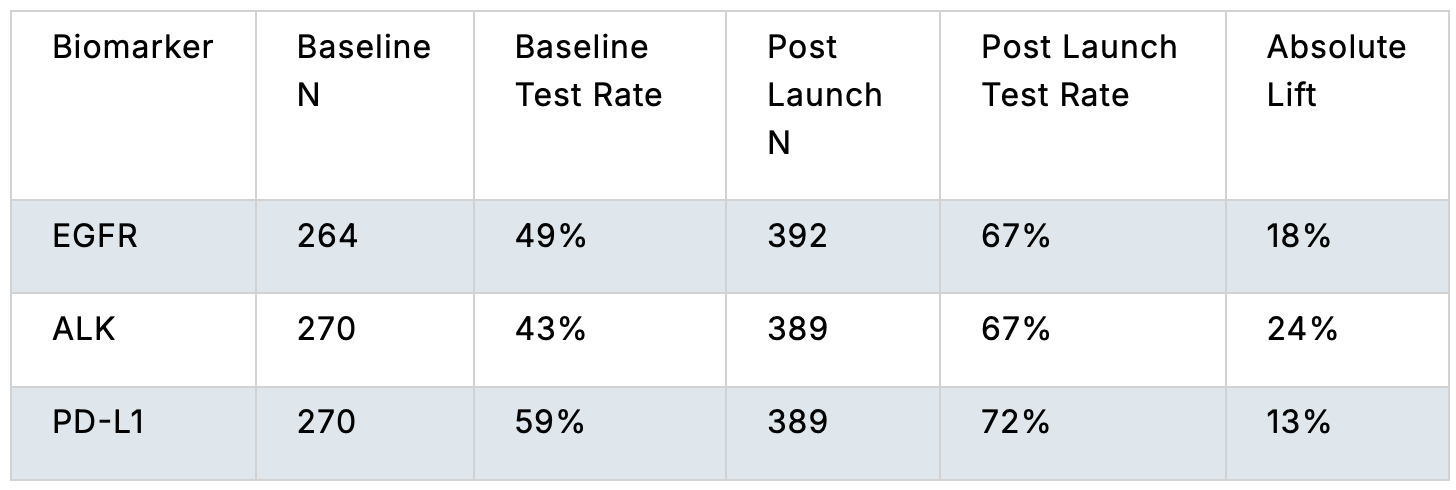
Outcomes (Baseline vs. Post-Launch):
-
Absolute Lift in Testing Rates: EGFR increased by 18%, ALK by 24%, and PD-L1 by 13%.
-
Impact: 89% of patients who underwent molecular testing and received adjuvant treatment were treated in accordance with clinical guidelines. This study demonstrates the tangible value of AI in bridging clinical information gaps and promoting standardized precision medicine.
About Tempus
Tempus is a technology company advancing precision medicine through the practical application of artificial intelligence in healthcare. With one of the world’s largest libraries of multimodal data, and an operating system to make that data accessible and useful, Tempus provides AI-enabled precision medicine solutions to physicians to deliver personalized patient care and in parallel facilitates discovery, development and delivery of optimal therapeutics. The goal is for each patient to benefit from the treatment of others who came before by providing physicians with tools that learn as the company gathers more data.
