

 5 min
5 minOn June 17, 2026, biotechnology company uniQure announced a major regulatory breakthrough following a recent Type B meeting with the U.S. Food and Drug Administration (FDA). The FDA confirmed that the 3-year analysis from the Phase I/II study of AMT-130, a gene therapy for Huntington’s disease (HD), would be acceptable as the primary basis for a Biologics License Application (BLA) under the accelerated approval pathway.
This development clears a significant hurdle for the commercialization of AMT-130 and offers long-awaited hope to patients affected by Huntington’s disease. Encouraged by this regulatory alignment, uniQure plans to formally submit its BLA to the FDA in the third quarter of 2026.
From Setback to Breakthrough: A Critical Regulatory Shift
The path to this regulatory pivot was not without challenges. As recently as March 2026, the FDA had indicated that the 3-year data from the Phase I/II study might be insufficient to support an accelerated approval filing. However, through persistent and constructive regulatory engagement, both parties reached a consensus.
Industry observers note that this shift reflects the evolving regulatory framework for rare diseases. The FDA’s decision demonstrates increased flexibility in evaluating real-world evidence and existing clinical data when addressing severe, life-altering conditions with high unmet needs like Huntington’s disease. Wall Street analysts suggest that this turn of events underscores the agency’s deep appreciation for the complex clinical challenges inherent in rare disease drug development.
Clinical Value of AMT-130: Addressing an Unmet Need
Huntington’s disease is an autosomal dominant neurodegenerative disorder caused by a CAG repeat expansion in the first exon of the huntingtin (HTT) gene, leading to the production and aggregation of abnormal proteins in the brain. The disease causes debilitating motor symptoms such as chorea, behavioral abnormalities, and cognitive decline. There are approximately 75,000 patients in the U.S., EU, and UK combined, and currently, there are no approved therapies capable of delaying onset or slowing disease progression.
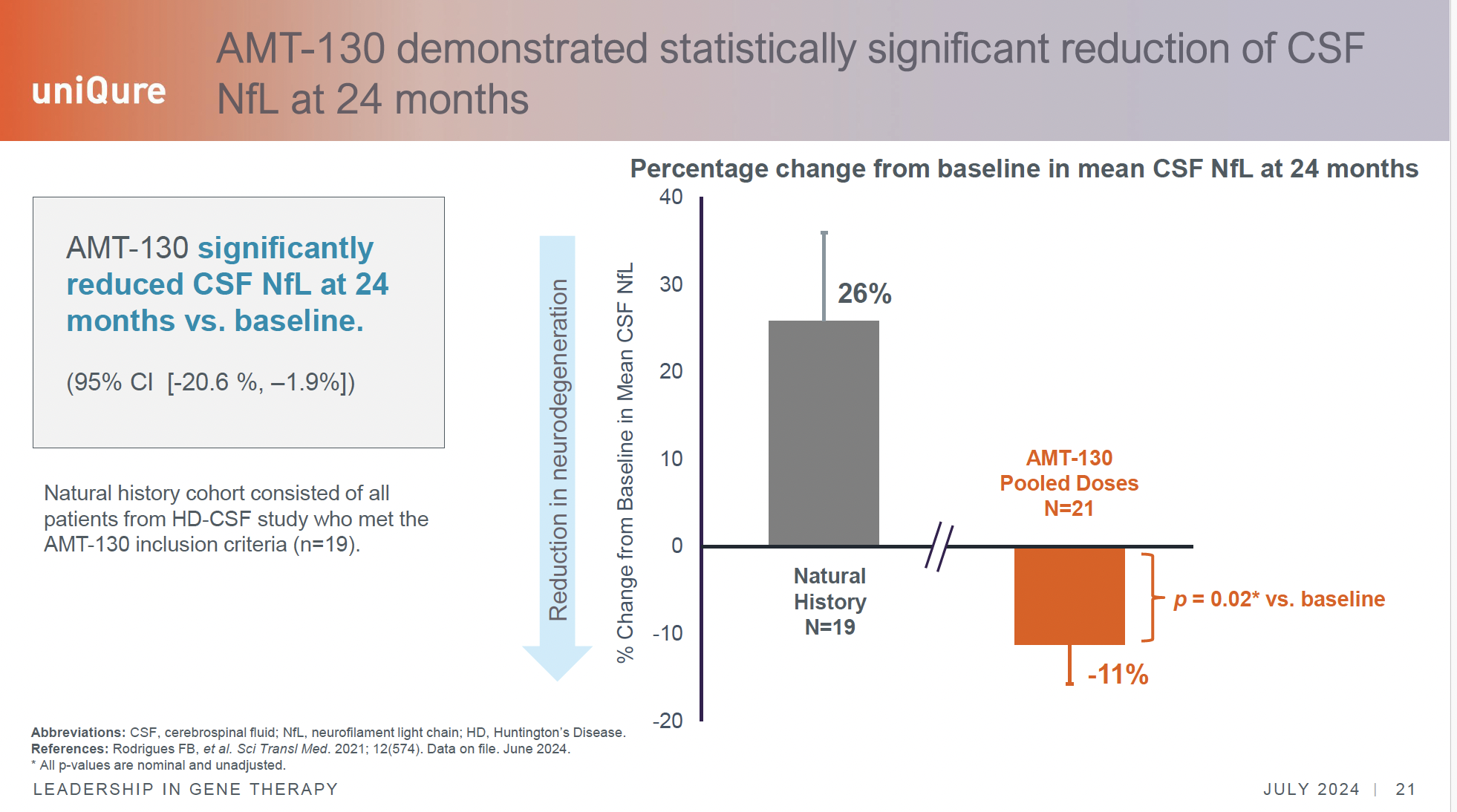
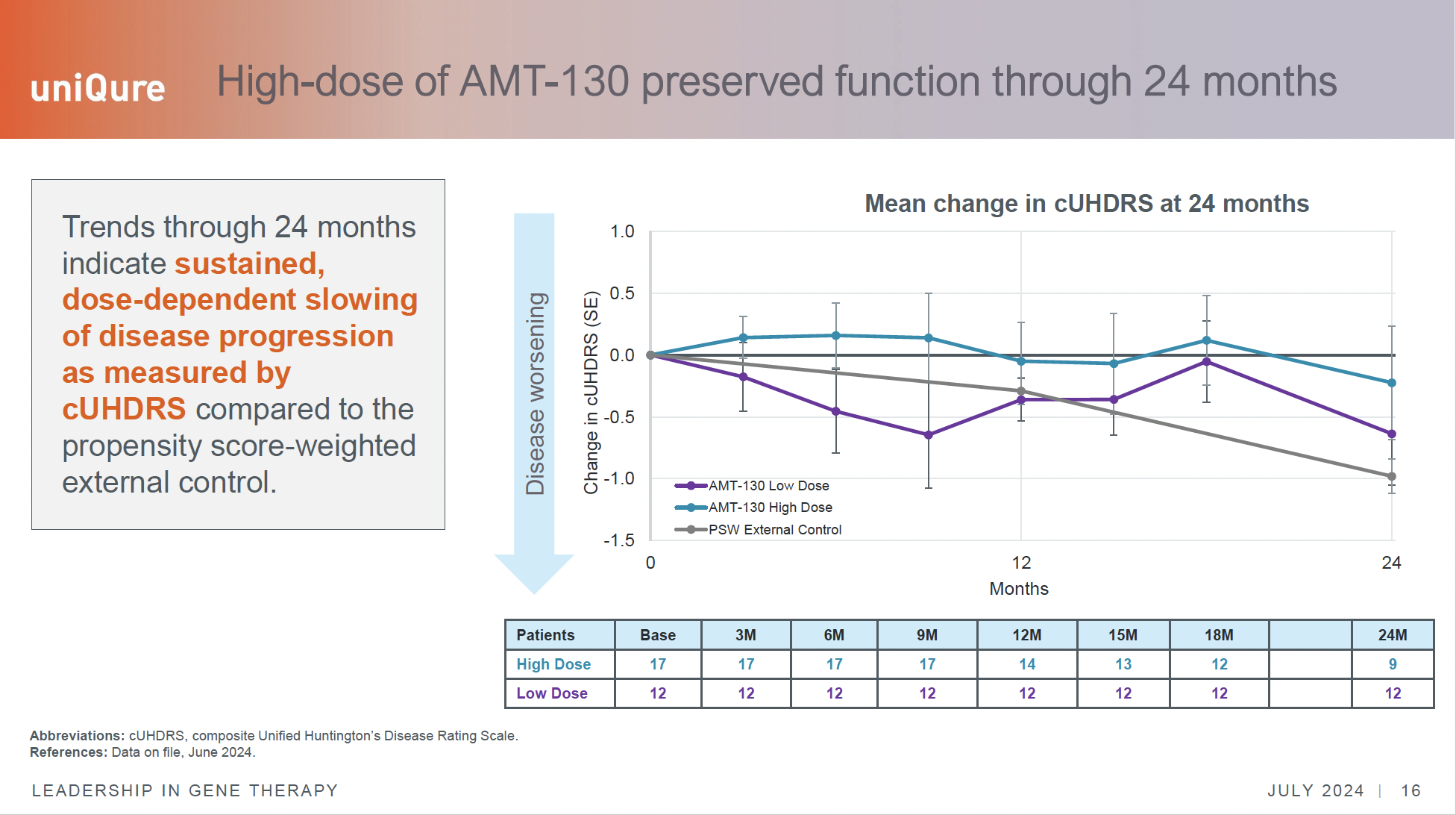
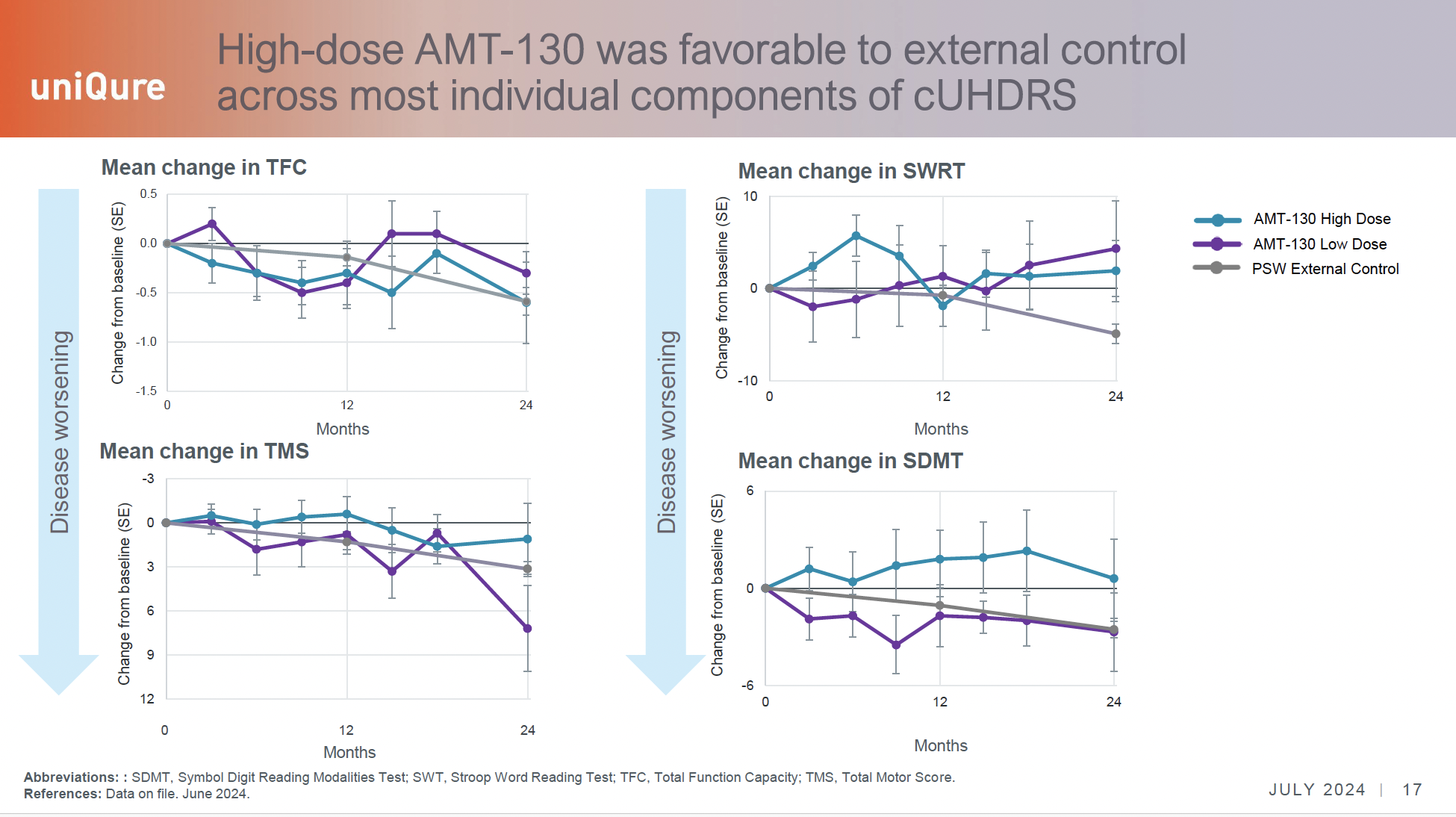
AMT-130 is a pioneering gene therapy designed to reduce the synthesis of mutant huntingtin protein at the source. It is administered via a single MRI-guided, convection-enhanced stereotactic neurosurgical delivery directly into the striatum (caudate and putamen). Utilizing a pre-specified statistical analysis plan, uniQure has compared results from its Phase I/II study with a propensity score-matched external control set derived from the Enroll-HD natural history database.
Key Clinical Highlights:
-
Target Population: Patients with early manifest Huntington’s disease.
-
Safety and Dosing: Clinical exploration of low-dose (n=6) and high-dose (n=10) cohorts has provided critical data regarding the safety and tolerability of this surgical delivery approach.
-
Regulatory Designations: AMT-130 is the first Huntington’s disease therapy to be granted Regenerative Medicine Advanced Therapy (RMAT) designation by the FDA. It has also received Breakthrough Therapy and Fast Track designations.
 The Path Forward: Defining the Confirmatory Study
While the path to a BLA submission is now open, uniQure remains focused on the requirements for full approval. The FDA has requested alignment on the design of a confirmatory study prior to the submission of the BLA.
A critical optimization in the study design is the FDA’s preference for using a "concurrent control on standard-of-care therapy" rather than the previously required "sham procedure" group. This adjustment significantly improves clinical ethics and reduces the challenges associated with patient recruitment. uniQure has stated its commitment to accelerating the initiation of this confirmatory study, ensuring it proceeds in parallel with the BLA regulatory review process.
A New Milestone in Gene Therapy
As a pioneer in the field—having successfully advanced the world’s first gene therapy for hemophilia B—uniQure has demonstrated its capability to translate gene-delivery platform expertise into treatments for complex diseases. The progress of AMT-130 represents not only a core milestone for uniQure’s pipeline but also a pivotal moment for genomic medicine as it enters the challenging arena of neurodegenerative diseases.
With the submission deadline approaching in the third quarter of 2026, a disease once deemed "untreatable" is now at a critical medical turning point. There is significant optimism that AMT-130 will move through the regulatory process, providing hundreds of thousands of patients and their families with a potentially transformative, life-changing solution.
